
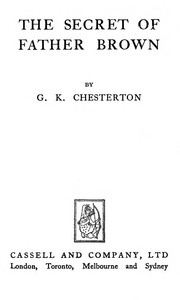
The secret of Father Brown
Written by G. K. (Gilbert Keith) Chesterton
Chaptra reads alongside you — AI insights, chapter breakdowns and reader discussions for every book. Join free
About this book
Reading guide
Themes, characters and key ideas in The secret of Father Brown, written by Chaptra AI.
- about 8 hours
- intermediate
- Mysterious
- Philosophical
- Intriguing
“The Secret of Father Brown” is a collection of detective stories by G. K. Chesterton, delving into the unique criminological methods of the unassuming Catholic priest, Father Brown. This volume explores the philosophical underpinnings of his approach, which relies on profound empathy and an understanding of the human capacity for sin rather than mere logical deduction. Often accompanied by his reformed criminal friend, Flambeau, Father Brown unravels intricate mysteries by piercing through deceptive appearances to discern the psychological and moral motivations of the culprits. The book offers a series of compelling puzzles that simultaneously serve as profound meditations on good and evil, the nature of truth, and the redemptive power of insight, all presented with Chesterton's signature wit and paradox.
“I am a man, and therefore have all devils in my heart.”
Key themes
- The Nature of Evil and Sin
- This theme is central to Father Brown's unique methodology. He believes that to truly understand crime, one must first understand sin, and this profound understanding comes from recognizing the potential for evil within oneself. The stories explore various manifestations of evil, from calculated malice and intellectual pride to crimes born of desperation or misguided virtue, often revealing its insidious, deceptive, and deeply human forms.
- Appearance vs. Reality / Deception
- Many of Chesterton's mysteries fundamentally hinge on the idea that what appears to be true is often a carefully constructed illusion. Characters, motives, and even the circumstances of a crime are frequently designed to mislead observers. Father Brown's genius lies in his ability to see through these elaborate deceptions to the underlying reality, often by questioning the most obvious or seemingly logical interpretations.
- Reason, Intuition, and Faith
- While other detectives rely purely on empirical evidence and logical deduction, Father Brown often integrates intuitive leaps and a faith-based understanding of human nature. His method isn't anti-reason, but rather transcends it, suggesting that a holistic understanding of truth and human motivation requires more than just observable facts. His insights frequently stem from a moral or spiritual perspective that illuminates the underlying logic of the criminal mind in ways purely rational analysis cannot.
Worth discussing
How does Father Brown's method of understanding criminals by recognizing the potential for evil within himself compare to more conventional detective methods (e.g., forensic science, logical deduction)? What are its strengths and weaknesses?
Chapter-by-chapter breakdowns, character arcs and the full thematic analysis come with a free account.
Discussions
No one has started one yet
Questions this book opens up
No discussions yet
Be the first to start a discussion about this book!
Sign up to start the discussionReviews
No reviews yet
Be the first to review this book!