
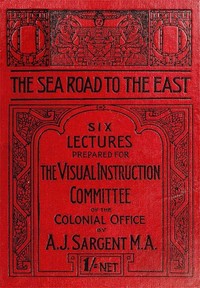
The Sea Road to the East, Gibraltar to Wei-hai-wei: Six Lectures Prepared for the Visual Instruction Committee of the Colonial Office
Written by A. J. (Arthur John) Sargent
Chaptra reads alongside you — AI insights, chapter breakdowns and reader discussions for every book. Join free
About this book
Reading guide
Themes, characters and key ideas in The Sea Road to the East, Gibraltar to Wei-hai-wei: Six Lectures Prepared for the Visual Instruction Committee of the Colonial Office, written by Chaptra AI.
- about 8 hours
- intermediate
- Informative
- Strategic
- Historical
A. J. Sargent's "The Sea Road to the East, Gibraltar to Wei-hai-wei" is a pivotal early 20th-century collection of six lectures designed to illuminate the strategic maritime routes vital to the British Empire. The work systematically explores key geographical points from the Mediterranean to the Far East, including Gibraltar and Malta, analyzing their historical significance for trade, military operations, and overall geopolitical influence. Sargent's narrative underscores Britain's imperial responsibilities and indispensable role in maintaining control and stability along these crucial corridors. By detailing the strategic value and historical context of each location, the book aims to educate its audience on the intricate web of power and commerce that defined Britain's global reach, effectively functioning as a primer on imperial geography and strategy. It serves as a historical artifact, reflecting the prevailing British worldview regarding its empire and maritime supremacy.
“Gibraltar, a sentinel carved from the rock, stands not merely as a fortress but as the very key to the Mediterranean, its history etched in sieges and its future inextricably linked to the fortunes of maritime power.”
Key themes
- British Imperialism and Colonialism
- This is the overarching theme, exploring the rationale, mechanisms, and perceived necessity of British global dominance. Sargent's work serves as a justification and instructional guide for maintaining the empire, detailing the strategic assets that underpin its power and the 'responsibilities' that come with it. It implicitly argues for the civilizing mission and economic benefits attributed to British rule.
- Geopolitics and Maritime Strategy
- The book meticulously dissects the strategic importance of geographical locations for controlling trade routes and projecting military power. It highlights how control over key maritime chokepoints and ports translates directly into political and economic influence, a core tenet of classical geopolitics and naval strategy.
- The Interconnectedness of Trade and Military Power
- Sargent demonstrates how commercial interests and military capabilities are inextricably linked in maintaining an empire. The security of trade routes necessitates military presence, and military bases are often established to protect and facilitate trade, creating a symbiotic relationship crucial for imperial prosperity and stability.
Worth discussing
How does Sargent's portrayal of 'British responsibilities' align with or diverge from modern understandings of colonial power and ethics?
Chapter-by-chapter breakdowns, character arcs and the full thematic analysis come with a free account.
Discussions
No one has started one yet
Questions this book opens up
No discussions yet
Be the first to start a discussion about this book!
Sign up to start the discussionReviews
No reviews yet
Be the first to review this book!