
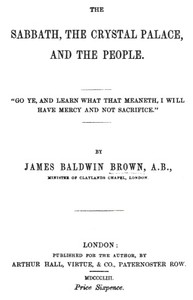
The Sabbath, the Crystal Palace, and the People
Written by James Baldwin Brown
Chaptra reads alongside you — AI insights, chapter breakdowns and reader discussions for every book. Join free
About this book
Reading guide
Themes, characters and key ideas in The Sabbath, the Crystal Palace, and the People, written by Chaptra AI.
- about 6 hours
- advanced
- serious
- thought-provoking
- analytical
James Baldwin Brown's "The Sabbath, the Crystal Palace, and the People" is a mid-19th century theological discourse addressing the complex relationship between the Church and Victorian society, specifically through the lens of the contentious debate surrounding the Sunday opening of the Crystal Palace. Brown navigates the spiritual significance of the Sabbath, advocating for its sanctity while simultaneously recognizing the evolving social needs of the working class. He argues against a rigid, uncompromising Sabbatarianism, proposing instead that engagement with cultural institutions like the Crystal Palace could elevate public morals and potentially lead to a deeper appreciation of spiritual observances. The book ultimately champions a balanced approach that honors religious tradition while adapting to contemporary societal demands, emphasizing the Church's moral responsibility to engage with and uplift the community.
“The Sabbath is not a yoke, but a wing; not a burden, but a blessed opportunity for renewal of spirit and soul.”
Key themes
- The Sanctity of the Sabbath vs. Social Utility
- This theme explores the central tension between the traditional, divinely ordained observance of the Sabbath as a day of rest and worship, and its potential reinterpretation to serve the social, moral, and educational needs of the populace, particularly the working class. Brown argues against a rigid, prohibitive Sabbatarianism, proposing instead a more expansive view where the Sabbath's spiritual purpose can be fulfilled through uplifting activities, even if they are not strictly confined to church attendance.
- The Church's Role and Moral Responsibility in Society
- Brown deeply concerns himself with the Church's responsibility to engage with and guide society, rather than retreat from its complexities. He challenges the Church to be more compassionate and understanding of the practical realities faced by the working class, advocating for an active, empathetic role in social progress. This theme emphasizes the moral imperative for religious institutions to adapt their approaches to meet contemporary needs while upholding their core values.
- Social Progress and the Working Class
- This theme highlights the specific plight and needs of the working class in Victorian England, who faced grueling labor conditions and limited opportunities for leisure or self-improvement. Brown champions their right to dignified rest and moral elevation, seeing the opening of institutions like the Crystal Palace as a means to foster social progress by improving the lives and characters of the populace. He connects individual well-being to the broader health of society.
Worth discussing
How does Brown's interpretation of the Sabbath differ from more rigid Sabbatarian views, and what are the implications of his perspective for religious observance today?
Chapter-by-chapter breakdowns, character arcs and the full thematic analysis come with a free account.
Discussions
No one has started one yet
Questions this book opens up
No discussions yet
Be the first to start a discussion about this book!
Sign up to start the discussionReviews
No reviews yet
Be the first to review this book!