
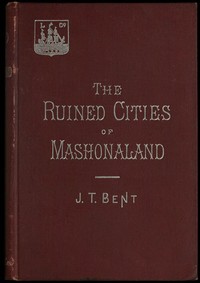
The ruined cities of Mashonaland: Being a record of excavation and exploration in 1891
Written by J. Theodore (James Theodore) Bent
Chaptra reads alongside you — AI insights, chapter breakdowns and reader discussions for every book. Join free
About this book
Reading guide
Themes, characters and key ideas in The ruined cities of Mashonaland: Being a record of excavation and exploration in 1891, written by Chaptra AI.
- about 8 hours
- advanced
- scholarly
- exploratory
- historical
J. Theodore Bent's "The Ruined Cities of Mashonaland" is a late 19th-century archaeological record detailing his 1891 expedition to South Africa, primarily focusing on the Great Zimbabwe ruins. The book meticulously documents the journey, excavations, and findings, aiming to unravel the history of the ancient civilization that constructed these enigmatic structures. Bent, accompanied by his wife and cartographer R. W. M. Swan, combines scholarly inquiry with observations of local tribes and landscapes, offering a foundational, albeit historically biased, account of these significant archaeological sites. It stands as a testament to early efforts to understand pre-colonial African history, framed within the colonial context of its era.
“The ruined cities of Mashonaland represent a problem which has long exercised the minds of those interested in the archaeology of South Africa.”
Key themes
- Exploration and Discovery
- The central driving force of the book, detailing the arduous journey into Mashonaland and the systematic uncovering of the Great Zimbabwe ruins. It explores the human desire to venture into the unknown, document new findings, and piece together forgotten histories.
- Colonialism and Empire
- The entire expedition operates within the framework of British imperial expansion. The book implicitly and explicitly reflects colonial attitudes, power dynamics, and the justification of European presence in Africa through 'scientific' inquiry and the 'discovery' of ancient civilizations.
- The Mystery of Ancient Civilizations
- This theme explores the human fascination with forgotten pasts and the enigma of sophisticated cultures that leave behind monumental structures. Bent's primary motivation is to solve the 'riddle' of Great Zimbabwe's builders, leading to his theories of external origins.
Worth discussing
How does Bent's work reflect the scientific and cultural biases of the late 19th century, particularly regarding non-European civilizations?
Chapter-by-chapter breakdowns, character arcs and the full thematic analysis come with a free account.
Discussions
No one has started one yet
Questions this book opens up
No discussions yet
Be the first to start a discussion about this book!
Sign up to start the discussionReviews
No reviews yet
Be the first to review this book!