
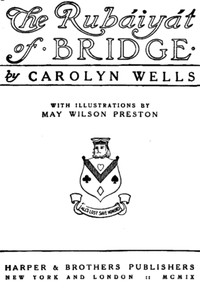
The Rubáiyát of Bridge
Written by Carolyn Wells
Chaptra reads alongside you — AI insights, chapter breakdowns and reader discussions for every book. Join free
About this book
Reading guide
Themes, characters and key ideas in The Rubáiyát of Bridge, written by Chaptra AI.
- about 2 hours
- intermediate
- humorous
- witty
- playful
Carolyn Wells's "The Rubáiyát of Bridge" is a witty early 20th-century poetic parody that playfully fuses the intricacies of the popular card game Bridge with the distinctive lyrical style of Omar Khayyam's classic "Rubáiyát." Through a series of cleverly crafted quatrains, Wells humorously explores the universal experiences of bridge players, from strategic dilemmas and competitive fervor to the social nuances and fleeting outcomes inherent in the game. Illustrated by May Wilson Preston, the collection offers a lighthearted yet insightful commentary on the joys and exasperations of the card table, appealing to both bridge enthusiasts and those appreciative of clever light verse. It stands as a charming tribute to a beloved pastime and a testament to the enduring power of parody.
“A Book of Rules, a Partner, and a Bid— / And Thou beside me playing in the Lead— / Ah, Bridge were Paradise enough for me!”
Key themes
- The Art and Frustration of Bridge
- This is the central theme, exploring the intricate rules, strategic depth, and emotional highs and lows inherent in the game of Bridge. Wells captures the intellectual challenge of bidding and play, the agony of missteps, and the fleeting joy of a well-executed hand, presenting bridge not just as a game but as a microcosm of life's unpredictable fortunes.
- Competition and Strategy
- The book delves into the competitive drive that propels players, the mental gymnastics involved in strategic planning, and the psychological warfare between opponents. It highlights the constant tension between analytical thought and impulsive action, and the desire to outwit others within the game's framework.
- Parody and Literary Homage
- The book itself is a testament to the power of parody as both a form of critique and homage. By meticulously mimicking the style, rhythm, and philosophical tone of Omar Khayyám's "Rubáiyát" and applying it to a seemingly trivial subject, Wells not only celebrates the original work but also demonstrates the versatility and humor that can be found in literary imitation. It highlights how familiar forms can be repurposed to shed new light on everyday experiences.
Worth discussing
How does Wells successfully adapt the philosophical tone of Omar Khayyám's "Rubáiyát" to the seemingly trivial world of bridge? What makes this parody effective?
Chapter-by-chapter breakdowns, character arcs and the full thematic analysis come with a free account.
Discussions
No one has started one yet
Questions this book opens up
No discussions yet
Be the first to start a discussion about this book!
Sign up to start the discussionReviews
No reviews yet
Be the first to review this book!