
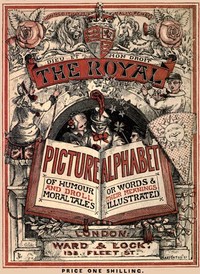
The Royal Picture Alphabet
Written by John Leighton
Chaptra reads alongside you — AI insights, chapter breakdowns and reader discussions for every book. Join free
About this book
Reading guide
Themes, characters and key ideas in The Royal Picture Alphabet, written by Chaptra AI.
- about 1 hours
- beginner
- whimsical
- educational
- humorous
John Leighton's "The Royal Picture Alphabet" is a quintessential Victorian children's educational book, masterfully blending visual appeal with didactic verse to teach the English alphabet and foundational moral principles. Each letter is creatively introduced through a specific word, accompanied by engaging illustrations and light-hearted poetic tales. The book's unique approach makes learning both enjoyable and memorable, fostering not only letter recognition and vocabulary expansion but also instilling valuable life lessons. It stands as a charming historical artifact, reflecting 19th-century pedagogical methods and societal values through its whimsical yet instructive content. Overall, it serves as a delightful and effective introduction to language and moral reasoning for young readers.
“A is for Ablution, a washing so grand, But too much soap makes a mess in the land!”
Key themes
- Language Acquisition and Early Education
- The primary purpose of the book is to introduce young learners to the English alphabet and expand their vocabulary. Each letter is linked to a specific word, often chosen for its illustrative potential, providing a concrete example for children to grasp. The use of clear illustrations, rhyming verse, and repetition facilitates memorization and understanding of both letters and associated concepts, laying a foundation for literacy.
- Moral Instruction and Victorian Values
- A foundational theme, the book consistently uses each letter's vignette to impart moral lessons aligned with Victorian societal norms. These include themes of cleanliness ('Ablution'), fairness and honesty ('Barter'), curiosity (with gentle warnings), industry, politeness, and respect. The lessons are presented in a light-hearted, non-preachy manner, making them accessible and palatable for young children.
- The Nature of Childhood and Play
- The book consistently depicts children in various states of play, exploration, and learning. It acknowledges the inherent curiosity and occasional naughtiness of children, using these natural inclinations as springboards for gentle instruction. The illustrations often show children engaged in typical childhood activities, making the book relatable and appealing to its young audience, while subtly guiding their behavior.
Worth discussing
How do the moral lessons in 'The Royal Picture Alphabet' compare to contemporary children's educational content?
Chapter-by-chapter breakdowns, character arcs and the full thematic analysis come with a free account.
Discussions
No one has started one yet
Questions this book opens up
No discussions yet
Be the first to start a discussion about this book!
Sign up to start the discussionReviews
No reviews yet
Be the first to review this book!