
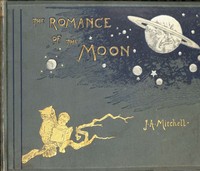
The Romance of the Moon
Written by John Ames Mitchell
Chaptra reads alongside you — AI insights, chapter breakdowns and reader discussions for every book. Join free
About this book
Reading guide
Themes, characters and key ideas in The Romance of the Moon, written by Chaptra AI.
- about 6 hours
- intermediate
- romantic
- whimsical
- poetic
John Ames Mitchell's "The Romance of the Moon" is a whimsical late 19th-century tale that personifies celestial bodies, weaving a poetic narrative around themes of love, jealousy, and cosmic relationships. The story centers on the thoughtful Moon, who finds herself in a romantic triangle with the Earth and the Sun. Driven by the jealous Saturn's long-standing adoration, a fierce cosmic battle erupts when the Earth expresses affection for the Moon, prompting the Sun's intervention. Ultimately, the Moon chooses the Earth, but their love is condemned to secrecy, allowing them to meet only under the veil of night. This charming fable invites readers to contemplate the emotional lives of planets and the enduring nature of love against a backdrop of cosmic drama.
“"In the vast, silent canvas of night, a thoughtful orb pondered the affections that drifted like stardust upon her." (Illustrates the Moon's reflective nature and the cosmic setting)”
Key themes
- Love and Rivalry
- This is the central theme, explored through the romantic triangle involving the Moon, Earth, and Sun, and intensified by Saturn's jealousy. The story examines different facets of love—affectionate, possessive, and chosen—and the conflicts that arise from competing desires.
- Personification and Cosmic Relationships
- Mitchell's narrative ingeniously imbues celestial bodies with human-like emotions, thoughts, and relationships. This theme explores the imaginative concept of the universe as a living, feeling entity, where cosmic events mirror human dramas and where the vastness of space becomes a stage for intimate emotional lives.
- Forbidden Love and Sacrifice
- After the Moon chooses Earth, their love is condemned to secrecy, only allowed to flourish under the cover of night. This explores the poignant theme of love that must be hidden, the sacrifices made for affection, and the enduring nature of a bond that defies powerful external constraints.
Worth discussing
How does the personification of celestial bodies enhance the story's themes? What are the implications of attributing human emotions to cosmic entities?
Chapter-by-chapter breakdowns, character arcs and the full thematic analysis come with a free account.
Discussions
No one has started one yet
Questions this book opens up
No discussions yet
Be the first to start a discussion about this book!
Sign up to start the discussionReviews
No reviews yet
Be the first to review this book!