
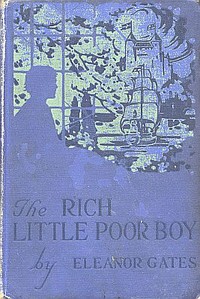
The Rich Little Poor Boy
Written by Eleanor Gates
Chaptra reads alongside you — AI insights, chapter breakdowns and reader discussions for every book. Join free
About this book
Reading guide
Themes, characters and key ideas in The Rich Little Poor Boy, written by Chaptra AI.
- about 8 hours
- intermediate
- Melancholy
- Hopeful
- Resilient
Eleanor Gates' early 20th-century novel, "The Rich Little Poor Boy," introduces Johnnie Smith, a ten-year-old boy enduring a harsh life in a tenement under the oppressive guardianship of Big Tom Barber. Despite his grim reality of poverty and fear, Johnnie possesses an extraordinary imagination, conjuring a vibrant inner world of nobility and adventure as an escape. He finds solace and connection with his step-sister, Cis, with whom he communicates through a secret language, highlighting his resilience and innate goodness. The narrative establishes Johnnie's struggles against adversity, his powerful escapist tendencies, and his underlying quest for kindness and a brighter future. It sets the stage for a poignant exploration of the human spirit's ability to dream and hope even in the darkest circumstances.
“"Though his clothes were tattered and his stomach often empty, his mind wore silks and feasted on grand adventures."”
Key themes
- Resilience and the Power of Imagination
- This theme explores how Johnnie uses his vivid imagination to cope with extreme adversity and find hope. His internal world of adventure and nobility serves as a sanctuary and a source of strength, enabling him to endure his harsh reality.
- Childhood Adversity and Social Injustice
- The novel critically examines the harsh realities of child neglect, poverty, and emotional abuse prevalent in early 20th-century society. Johnnie's experiences shed light on the vulnerability of children within inadequate social structures and abusive guardianships.
- The Search for Kindness and Belonging
- Beneath Johnnie's imaginative escapes lies a profound yearning for genuine human connection, love, and a sense of belonging. His dreams of a 'brighter future' are implicitly tied to finding a place where he is valued and treated with kindness.
Worth discussing
How does Johnnie's imagination serve as both a coping mechanism and a source of strength? Can imagination truly change one's reality?
Chapter-by-chapter breakdowns, character arcs and the full thematic analysis come with a free account.
Discussions
No one has started one yet
Questions this book opens up
No discussions yet
Be the first to start a discussion about this book!
Sign up to start the discussionReviews
No reviews yet
Be the first to review this book!