
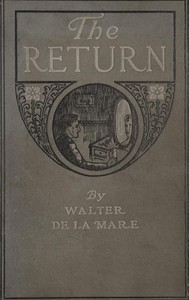
The Return
Written by Walter De la Mare
Chaptra reads alongside you — AI insights, chapter breakdowns and reader discussions for every book. Join free
About this book
Reading guide
Themes, characters and key ideas in The Return, written by Chaptra AI.
- about 8 hours
- intermediate
- mysterious
- unsettling
- melancholic
Walter de la Mare's "The Return" is a profound psychological novel exploring themes of identity and reality through the mysterious transformation of its protagonist, Arthur Lawford. After a contemplative stroll in a churchyard, Lawford awakens from a brief slumber to find his physical appearance drastically altered, rendering him unrecognizable even to himself. This uncanny change plunges him into an existential crisis, forcing him to confront not only his own fractured sense of self but also the alienated reactions of those closest to him, particularly his wife, Sheila. The narrative delves deep into the unsettling experience of losing one's known identity and the struggle to reclaim or redefine it amidst an inexplicable, supernatural event, questioning the very essence of what makes a person 'them self'.
“"This face, this stranger in the glass, how could it be mine, and yet not mine?"”
Key themes
- Identity and the Self
- The central theme of the novel, exploring the multifaceted nature of identity. It questions whether identity is tied to physical appearance, memory, external recognition, or an inherent, unchanging essence. Arthur's transformation forces him and the reader to confront the fragility of the self and the profound disorientation that occurs when one's external presentation no longer aligns with internal conviction.
- Reality vs. Perception
- This theme explores the subjective nature of reality and how individual perception shapes truth. Arthur's internal reality (he is still Arthur) clashes violently with the objective reality perceived by others (he is a stranger). The novel questions what constitutes 'truth' when personal experience and external evidence are in direct contradiction, highlighting the unreliability of both senses and memory.
- Isolation and Alienation
- The novel vividly portrays the profound sense of isolation and alienation experienced by Arthur after his transformation. Stripped of his identity and rejected by his loved ones, he is cast adrift in a world where he no longer belongs. This theme explores the psychological torment of being utterly alone, unable to connect with others, and the devastating impact of losing one's social and familial anchors.
Worth discussing
How does Arthur's physical transformation reflect or amplify his internal state before the change?
Chapter-by-chapter breakdowns, character arcs and the full thematic analysis come with a free account.
Discussions
No one has started one yet
Questions this book opens up
No discussions yet
Be the first to start a discussion about this book!
Sign up to start the discussionReviews
No reviews yet
Be the first to review this book!