
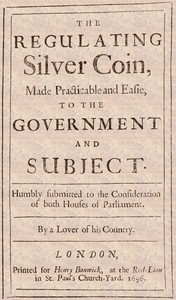
The Regulating Silver Coin, Made Practicable and Easie, to the Government and Subject
Written by Samuel Pratt
Chaptra reads alongside you — AI insights, chapter breakdowns and reader discussions for every book. Join free
About this book
Reading guide
Themes, characters and key ideas in The Regulating Silver Coin, Made Practicable and Easie, to the Government and Subject, written by Chaptra AI.
- about 10 hours
- advanced
- analytical
- didactic
- urgent
Samuel Pratt's "The Regulating Silver Coin, Made Practicable and Easie, to the Government and Subject" is a pivotal late 17th-century economic treatise that meticulously dissects the monetary crisis plaguing England, primarily the debasement and scarcity of silver coinage. Writing as 'a Lover of his Country,' Pratt offers a comprehensive analysis of the intrinsic and extrinsic values of money, arguing that poor-quality currency stifles trade, encourages hoarding, and leads to the exportation of good coin. The work systematically identifies the causes of the nation's financial woes, particularly during a period of war, and proposes a series of practical, actionable reforms. These solutions include the systematic recall of clipt and diminished coinage, equitable compensation for its holders, and the re-issuance of new, intrinsically valuable currency to restore economic stability and public confidence.
“For when the Coin is bad, the Nation is like a Body whose Vitals are impaired; all its Members suffer, and its Strength decays.”
Key themes
- Currency Debasement and Reform
- This is the central theme of the treatise, exploring the catastrophic effects of a debased and inconsistent currency on a nation's economy. Pratt details how practices like clipping reduce the intrinsic value of coins, leading to their scarcity, hoarding, and exportation. The theme then shifts to advocating for comprehensive reform, including calling in old coinage and re-minting new, full-weight currency to restore stability.
- Economic Stability and National Prosperity
- Pratt consistently links a sound monetary system to the overall economic health and prosperity of the nation. He argues that a stable, reliable currency is essential for facilitating trade, encouraging investment, and ultimately enhancing England's power and influence on the international stage. The treatise frames monetary reform not just as an economic necessity but as a matter of national security and prestige.
- Intrinsic vs. Extrinsic Value of Money
- A core economic concept explored in the book is the distinction between the inherent worth of a coin (its metallic content) and its face value as legal tender. Pratt demonstrates how a discrepancy between these two values—when extrinsic value is maintained despite reduced intrinsic value—leads to economic distortions, as people are incentivized to melt down or export coins whose metal content exceeds their legal value, or hoard those with higher intrinsic worth.
Worth discussing
How does Pratt's analysis of intrinsic vs. extrinsic value of money resonate with modern debates about fiat currency and cryptocurrency?
Chapter-by-chapter breakdowns, character arcs and the full thematic analysis come with a free account.
Discussions
No one has started one yet
Questions this book opens up
No discussions yet
Be the first to start a discussion about this book!
Sign up to start the discussionReviews
No reviews yet
Be the first to review this book!