
About this book
Reading guide
Themes, characters and key ideas in The reformation in Poland : $b Some social and economic aspects, written by Chaptra AI.
- about 8 hours
- advanced
- Scholarly
- Analytical
- Historical
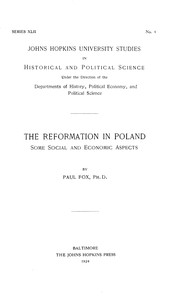
Paul Fox's "The Reformation in Poland: Some Social and Economic Aspects" is an early 20th-century historical study that re-evaluates the trajectory of the Reformation in Poland. It meticulously argues that socio-economic forces, rather than solely religious fervor, were the primary drivers behind both the initial rise and eventual decline of the Protestant movement in the region. The book posits that deep-seated Polish independence from papal authority, coupled with the influence of humanism and pre-Reformation dissent, created a fertile ground for religious change. Fox's work offers a nuanced perspective on a pivotal era, highlighting the intricate interplay between material conditions and spiritual reform.
“The Reformation in Poland was less a theological revolution than a socio-economic realignment, reflecting the deep-seated material interests of its adherents and opponents.”
Key themes
- Socio-economic Determinism in Religious Change
- This is the central thesis of the book, arguing that the rise and fall of the Reformation in Poland were primarily driven by material conditions, economic interests, and social structures rather than purely theological or spiritual motivations. Fox meticulously connects religious adherence to the practical benefits or disadvantages for different social groups.
- National Identity vs. External Authority
- The book highlights a recurring theme in Polish history: the struggle against external imposition, particularly from papal authority. This pre-existing independent spirit created a fertile ground for the Reformation, which was seen by many as an assertion of national and political autonomy against Rome.
- The Role of Intellectual Currents in Social Change
- Fox demonstrates how broader intellectual movements, particularly Humanism, and the legacy of earlier reform efforts (like Wycliffe and Hussitism), provided the conceptual framework and intellectual tools for the Reformation to take root. These currents fostered critical thinking and a receptivity to new ideas.
Worth discussing
To what extent can religious movements truly be separated from their socio-economic contexts, as argued by Fox?
Chapter-by-chapter breakdowns, character arcs and the full thematic analysis come with a free account.
Discussions
No one has started one yet
Questions this book opens up
No discussions yet
Be the first to start a discussion about this book!
Sign up to start the discussionReviews
No reviews yet
Be the first to review this book!