
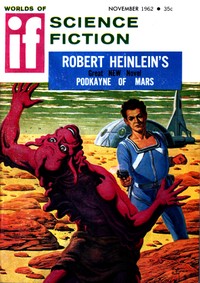
The Real Thing
Written by Albert Teichner
Chaptra reads alongside you — AI insights, chapter breakdowns and reader discussions for every book. Join free
About this book
Reading guide
Themes, characters and key ideas in The Real Thing, written by Chaptra AI.
- about 8 hours
- intermediate
- philosophical
- tense
- introspective
Albert Teichner's "The Real Thing" is an early 1960s science fiction short story that profoundly explores the blurred lines between authenticity and imitation in a technologically advanced future. The narrative centers on Stahl, a collector of exquisite counterfeits, and his interactions with two visitors, Tinker and Smith, whose philosophical debate about genuine experiences versus their artificial counterparts escalates. A tense confrontation over a fake bill culminates in Smith's dramatic revelation of his own partially artificial identity through self-mutilation, forcing a re-evaluation of what it means to be human. This pivotal event transforms Stahl from a detached observer of imitations into an individual capable of empathy and a yearning for authentic connection, ultimately reflecting on the integration of intellect and emotion in the journey towards true humanity.
“Is a perfect imitation, indistinguishable from the original, truly less 'real'?”
Key themes
- Authenticity vs. Imitation
- This is the central theme, explored through Stahl's collection of perfect counterfeits and the ensuing philosophical debate. The story questions whether a perfectly replicated item holds the same value or 'realness' as an original, challenging the very definition of authenticity in a technologically advanced world. It delves into the subjective nature of perception and the criteria we use to assign value.
- Identity and Reality
- The story profoundly explores how technology blurs the lines of personal identity and what constitutes 'reality.' Smith's character embodies this theme, as his own partially artificial nature leads to an existential crisis. It questions whether physical authenticity is paramount to identity or if consciousness and experience are more defining, especially when the body itself can be altered or imitated.
- The Impact of Advanced Technology on Human Experience
- Teichner's story, set in an early 1960s vision of the future, anticipates the profound ways technology can reshape human experience, perception, and relationships. It highlights how the ability to create perfect imitations not only affects commerce and art but also fundamentally alters our understanding of reality and self-worth. It's a cautionary tale about the potential for technology to create existential dilemmas.
Worth discussing
How does Teichner's story challenge our conventional understanding of 'authenticity' and 'originality'?
Chapter-by-chapter breakdowns, character arcs and the full thematic analysis come with a free account.
Discussions
No one has started one yet
Questions this book opens up
No discussions yet
Be the first to start a discussion about this book!
Sign up to start the discussionReviews
No reviews yet
Be the first to review this book!