
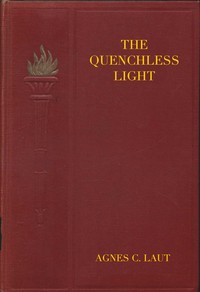
The quenchless light
Written by Agnes C. Laut
Chaptra reads alongside you — AI insights, chapter breakdowns and reader discussions for every book. Join free
About this book
Reading guide
Themes, characters and key ideas in The quenchless light, written by Chaptra AI.
- about 10 hours
- intermediate
- historical
- intriguing
- perilous
Agnes C. Laut's "The Quenchless Light" is an early 20th-century historical narrative that vividly reimagines the lives of early Christian Disciples and Apostles amidst the challenging Roman Empire. The book blends historical fact with fictionalized human stories, focusing on their struggles against doubt and persecution to uphold Christian truths. Through characters like the compassionate Prætorian guard Julius and the mysterious runaway Onesimus, Laut explores themes of faith, freedom, and human connection in a world hostile to nascent Christianity. The narrative opens dramatically during a Roman Spring Festival, setting a tone of intrigue and urgency as Julius encounters Onesimus, a youth of surprising noble birth connected to both the Emperor and an imprisoned Christian Prophet, thereby laying the groundwork for a nuanced exploration of belief and loyalty.
“"In a world drunk on fleeting pleasures, some lights refuse to be quenched."”
Key themes
- Faith vs. Doubt
- This theme explores the profound internal and external struggles faced by early Christians in upholding their beliefs against a world filled with skepticism, paganism, and persecution. It also delves into the personal journeys of characters like Julius, who are confronted with a new faith that challenges their established worldviews, forcing them to question their convictions and loyalties.
- Humanity of Historical Figures
- Laut's explicit aim is to unearth the 'human stories' behind the figures of early Christianity. This theme emphasizes the relatable struggles, fears, and triumphs of individuals who are often seen as distant, idealized, or mythical. It seeks to bridge the gap between historical figures and contemporary readers by portraying their lives with emotional depth and psychological realism, making their experiences more accessible and impactful.
- Freedom and Captivity
- The book examines different facets of freedom: physical liberty (Onesimus as a runaway, the Prophet's imprisonment), and spiritual freedom (the liberation from fear, doubt, and worldly attachments offered by Christian faith). It contrasts the Roman concept of order and imperial control with the Christian ideal of inner freedom and liberation through belief, even in the face of physical bondage.
Worth discussing
How does Laut's blend of 'fact with fiction' enhance or detract from the historical understanding of early Christianity?
Chapter-by-chapter breakdowns, character arcs and the full thematic analysis come with a free account.
Discussions
No one has started one yet
Questions this book opens up
No discussions yet
Be the first to start a discussion about this book!
Sign up to start the discussionReviews
No reviews yet
Be the first to review this book!