
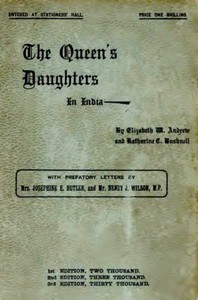
The Queen's Daughters in India
Written by Katharine C. (Katharine Caroline) Bushnell,Elizabeth W. Andrew
Chaptra reads alongside you — AI insights, chapter breakdowns and reader discussions for every book. Join free
About this book
Reading guide
Themes, characters and key ideas in The Queen's Daughters in India, written by Chaptra AI.
- about 8 hours
- advanced
- Somber
- Exposing
- Indignant
"The Queen's Daughters in India" by Elizabeth W. Andrew and Katharine C. Bushnell is a powerful late 19th-century exposé detailing the systemic exploitation of Indian women under British military rule. The authors meticulously document the state-sanctioned regulation of prostitution in British Cantonments, revealing the brutal realities of forced licensing, degrading medical examinations, and coerced servitude. This work serves as an urgent moral critique, highlighting the profound suffering of vulnerable women and the ethical bankruptcy of imperial practices that condoned such abuses. Through their investigative mission, Andrew and Bushnell aimed to gather irrefutable evidence, advocating fiercely for these women and challenging the oppressive structures that governed their lives. The book stands as a testament to their courage and commitment to social justice, offering a stark historical account of a dark chapter in colonial history.
“"The very heart of the Empire beat with a pulse of hypocrisy, demanding purity at home while sanctioning degradation abroad."”
Key themes
- Colonialism and its Abuses
- The book meticulously details how the British colonial administration, under the guise of imperial authority and military necessity, established and maintained a system of sexual exploitation. This theme explores how colonial power not only subjugated a nation but also extended its control into the most intimate and degrading aspects of individual lives, particularly those of vulnerable women. It exposes the inherent brutality and moral bankruptcy that underpinned much of the 'civilizing mission' of the British Empire.
- Gender Inequality and Exploitation
- At its core, the book is a searing indictment of extreme gender inequality. It reveals how women, specifically Indian women under colonial rule, were reduced to commodities, their bodies controlled and exploited to serve the needs of male soldiers. This exploitation was not random but institutionalized, highlighting how patriarchal structures, amplified by colonial power, can lead to the systematic dehumanization and sexual servitude of women. The women are denied agency, dignity, and basic human rights.
- Activism and Moral Courage
- The book itself is a testament to the power of activism and the moral courage of individuals challenging systemic injustice. Andrew and Bushnell, as the protagonists, embody this theme through their dangerous and difficult mission to investigate and expose the truth. Their willingness to confront powerful institutions, gather evidence, and advocate for the voiceless demonstrates the critical role of principled action in driving social change, even against overwhelming odds.
Worth discussing
Discuss the ethical implications of state-sanctioned prostitution in a colonial context. How does it reflect broader power dynamics?
Chapter-by-chapter breakdowns, character arcs and the full thematic analysis come with a free account.
Discussions
No one has started one yet
Questions this book opens up
No discussions yet
Be the first to start a discussion about this book!
Sign up to start the discussionReviews
No reviews yet
Be the first to review this book!