
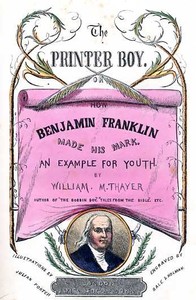
The Printer Boy; Or, How Benjamin Franklin Made His Mark: An Example for Youth.
Written by William Makepeace Thayer
Chaptra reads alongside you — AI insights, chapter breakdowns and reader discussions for every book. Join free
About this book
Reading guide
Themes, characters and key ideas in The Printer Boy; Or, How Benjamin Franklin Made His Mark: An Example for Youth., written by Chaptra AI.
- about 8 hours
- intermediate
- uplifting
- instructive
- historical
William M. Thayer's "The Printer Boy" is a late 19th-century didactic biography chronicling the formative years of Benjamin Franklin, from his childhood in Boston to his rise as an influential figure. The narrative begins with a pivotal anecdote of young Franklin impulsively buying an overpriced whistle, establishing the book's central motif of thoughtful decision-making and the value of prudence. Designed as an inspirational guide for youth, the book meticulously details Franklin's early experiences, emphasizing the development of virtues such as industriousness, thrift, and self-reliance. It posits Franklin's early struggles and lessons learned as the foundational elements that shaped his illustrious future as a statesman, inventor, and philosopher, serving as a powerful exemplar for character formation.
“"The dearest whistle I ever bought!" cried Benjamin, reflecting on the cost of impulsive choices.”
Key themes
- Industriousness and Self-Improvement
- This theme is central to the entire narrative, portraying Franklin's life as a testament to the power of hard work, continuous learning, and self-discipline. The book emphasizes that success is not accidental but a direct result of persistent effort and a commitment to personal growth, both intellectually and morally.
- Prudence and Thrift
- Explored from the very first chapter, this theme highlights the importance of wise decision-making, financial responsibility, and avoiding impulsive actions. Franklin's journey is presented as a series of lessons in understanding true value, managing resources, and making choices that serve long-term goals rather than immediate gratification.
- Character Formation and Moral Virtue
- The book explicitly serves as an 'Example for Youth,' making character formation a paramount theme. It argues that a strong moral character—built on virtues like honesty, humility, justice, and sincerity—is the foundation for true success and respect, beyond mere material wealth.
Worth discussing
How does the opening 'whistle' anecdote set the tone for the entire book, and what enduring lesson does it impart?
Chapter-by-chapter breakdowns, character arcs and the full thematic analysis come with a free account.
Discussions
No one has started one yet
Questions this book opens up
No discussions yet
Be the first to start a discussion about this book!
Sign up to start the discussionReviews
No reviews yet
Be the first to review this book!