
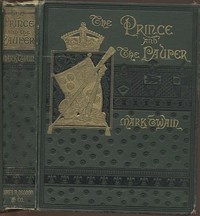
The Prince and the Pauper
Written by Mark Twain
Chaptra reads alongside you — AI insights, chapter breakdowns and reader discussions for every book. Join free
About this book
Read it with a club
Chaptra's history and war clubs — small groups reading the same books and talking as they go.


Footnotes & Firefights
History and war
- 4 members
- 4 discussions
- Active Sep 11
Military history, from grand strategy down to the deeply boring logistics that actually decided everything. This is a Chaptra house club — set up and moderated by us to get the conversation going. Open to everyone; jump in anywhere.
Read The Prince and the Pauper alongside people who are reading it too.
Also here: Empire, Reconsidered
Chaptra Prime — paid clubs, every club feature, and unlimited reading support, for $5 a month or $60 once.
See PrimeReading guide
Themes, characters and key ideas in The Prince and the Pauper, written by Chaptra AI.
- about 8 hours
- intermediate
- historical
- adventurous
- social commentary
Mark Twain's "The Prince and the Pauper" is a historical novel set in 16th-century England, exploring themes of social injustice, identity, and the arbitrary nature of power. It tells the story of Edward Tudor, the Prince of Wales, and Tom Canty, a pauper from Offal Court, who are born on the same day and bear an astonishing resemblance. Through a chance encounter, they swap clothes and, consequently, lives, forcing each boy to experience the vastly different realities of the other's existence. The narrative follows their individual struggles to prove their true identities amidst a world that judges solely by appearance, ultimately leading to profound personal growth and a deeper understanding of human suffering and justice.
“What dost thou know of suffering, thou heir of a kingdom?”
Key themes
- Social Injustice and Class
- The novel starkly contrasts the lives of the rich and poor, highlighting the arbitrary nature of birthright and the systemic cruelties faced by those in poverty. Twain exposes how society's judgment is based on superficial appearances rather than intrinsic worth, and how the legal system often oppresses the vulnerable.
- Identity and Appearance vs. Reality
- At the heart of the story is the question of what truly constitutes identity. Is it one's birthright, social status, or the clothes one wears, or is it inherent character and actions? The identical appearances of Edward and Tom, and their subsequent swap, force everyone (including themselves) to confront this question.
- Compassion and Empathy
- The novel emphasizes the transformative power of empathy. Edward's character arc is largely defined by his acquisition of compassion through suffering, which ultimately makes him a better ruler. Tom, though overwhelmed, also shows empathy by remembering the plight of the poor.
Worth discussing
How does Twain use the character swap to critique the social and political structures of 16th-century England? Are these critiques still relevant today?
Chapter-by-chapter breakdowns, character arcs and the full thematic analysis come with a free account.
Discussions
No one has started one yet
Questions this book opens up
No discussions yet
Be the first to start a discussion about this book!
Sign up to start the discussionReviews
No reviews yet
Be the first to review this book!