
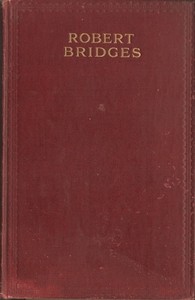
The Poetical Works of Robert Bridges, Excluding the Eight Dramas
Written by Robert Bridges
Chaptra reads alongside you — AI insights, chapter breakdowns and reader discussions for every book. Join free
About this book
Reading guide
Themes, characters and key ideas in The Poetical Works of Robert Bridges, Excluding the Eight Dramas, written by Chaptra AI.
- about 15 hours
- advanced
- philosophical
- contemplative
- lyrical
This collection, "The Poetical Works of Robert Bridges, Excluding the Eight Dramas," offers a comprehensive anthology of Robert Bridges' diverse poetic output from the early 20th century, showcasing his mastery of classical forms and lyrical expression. It delves into universal themes such as love, nature, mythology, and the complexities of the human condition, often through the lens of classical inspiration. A significant portion is dedicated to "Prometheus the Firegiver," a poetic mask retelling the myth of Prometheus's defiance of Zeus to bestow fire upon humanity. This particular work establishes a foundational tension between divine authority and human progress, exploring the profound implications of knowledge and power for civilization, a contemplative thread woven throughout the wider collection.
“I love all beauteous things, I seek and adore them.”
Key themes
- The Dual Nature of Knowledge and Power
- The gift of fire symbolizes both immense potential for good (civilization, art, warmth) and immense danger (destruction, war, divine punishment). Bridges explores how knowledge and power, while enabling progress, also bring responsibility and the capacity for misuse, a profound human dilemma.
- Rebellion Against Tyranny
- This theme is centrally explored through Prometheus's defiance of Zeus's absolute authority. It questions the legitimacy of oppressive power and champions the right to self-determination and progress, even in the face of divine retribution. Bridges uses the myth to reflect on broader concepts of freedom and resistance.
- Classical Allusion and Modern Interpretation
- Bridges' work is heavily informed by classical Greek and Roman literature, not merely through direct retellings like 'Prometheus the Firegiver,' but also in his aesthetic principles, his use of meter, and his philosophical outlook. He reinterprets ancient narratives and forms to explore timeless human dilemmas relevant to his own era.
Worth discussing
How does Bridges' use of classical mythology, particularly in 'Prometheus the Firegiver,' serve to comment on contemporary human issues?
Chapter-by-chapter breakdowns, character arcs and the full thematic analysis come with a free account.
Discussions
No one has started one yet
Questions this book opens up
No discussions yet
Be the first to start a discussion about this book!
Sign up to start the discussionReviews
No reviews yet
Be the first to review this book!