
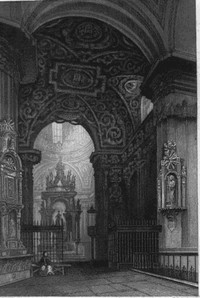
The Picturesque Antiquities of Spain: Described in a series of letters, with illustrations representing Moorish palaces, cathedrals, and other monuments of art, contained in the cities of Burgos, Valladolid, Toledo, and Seville.
Written by Nathaniel Armstrong Wells
Chaptra reads alongside you — AI insights, chapter breakdowns and reader discussions for every book. Join free
About this book
Reading guide
Themes, characters and key ideas in The Picturesque Antiquities of Spain: Described in a series of letters, with illustrations representing Moorish palaces, cathedrals, and other monuments of art, contained in the cities of Burgos, Valladolid, Toledo, and Seville., written by Chaptra AI.
- about 8 hours
- intermediate
- Descriptive
- Historical
- Reflective
Nathaniel Armstrong Wells's "The Picturesque Antiquities of Spain" is a mid-19th century travelogue presented as a series of letters to a friend, Mrs. C----R. The book details Wells's explorations across Spain, focusing primarily on its rich architectural heritage, including Moorish palaces, grand cathedrals, and significant monuments in cities like Burgos, Toledo, and Seville. Eschewing lavish romanticism for a practical lens, Wells aims to provide an entertaining yet informative account of Spain's historical and artistic landscape. The narrative also touches upon the contemporary state of the country, noting how recent revolutions have shifted the focus from ceremonial grandeur to the enduring beauty of its structures, making it a valuable historical and cultural document.
“My aim is to provide an entertaining account of its monuments and culture, approaching the subject matter with a practical lens rather than lavish romanticism.”
Key themes
- Appreciation of Art and Architecture
- This is the central theme, as Wells dedicates extensive portions of the book to describing the intricate details, historical context, and aesthetic impact of Spain's architectural wonders. He explores the fusion of Moorish and Christian styles, highlighting the beauty and craftsmanship of cathedrals, palaces, and other monuments as expressions of human creativity and historical evolution.
- Historical Legacy and Preservation
- Wells constantly connects the monuments he describes to the historical periods and events that shaped them, emphasizing Spain's rich and often turbulent past. He views the buildings as tangible links to previous eras, prompting reflection on the endurance of human achievement and the importance of preserving these historical markers for future generations.
- Cultural Observation and Understanding
- Beyond architecture, Wells engages in observations of Spanish culture, albeit through a 19th-century English lens. He comments on customs, daily life, and the general atmosphere of the cities he visits. His aim is to provide a comprehensive picture of Spain, not just its buildings, fostering a deeper understanding of the people and their way of life as shaped by their history and environment.
Worth discussing
How does Wells's stated 'practical lens' contrast with more 'romantic' or subjective travel writing of his era or even today?
Chapter-by-chapter breakdowns, character arcs and the full thematic analysis come with a free account.
Discussions
No one has started one yet
Questions this book opens up
No discussions yet
Be the first to start a discussion about this book!
Sign up to start the discussionReviews
No reviews yet
Be the first to review this book!