
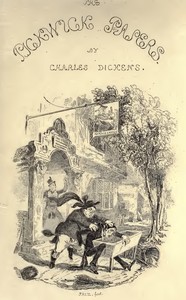
The Pickwick Papers
Written by Charles Dickens
Chaptra reads alongside you — AI insights, chapter breakdowns and reader discussions for every book. Join free
About this book
Read it with a club
Small groups reading the same books and talking as they go.


News
- 4 members
- 1,813 discussions
- Active Sep 11
Read The Pickwick Papers alongside people who are reading it too.
Also here: News Bulletin, Just Joking....
Chaptra Prime — paid clubs, every club feature, and unlimited reading support, for $5 a month or $60 once.
See PrimeReading guide
Themes, characters and key ideas in The Pickwick Papers, written by Chaptra AI.
- about 20 hours
- intermediate
- humorous
- satirical
- episodic
Charles Dickens's "The Pickwick Papers" chronicles the picaresque adventures of the benevolent and naive Samuel Pickwick, founder of the Pickwick Club, and his fellow Pickwickians – Mr. Winkle, Mr. Snodgrass, and Mr. Tupman – as they journey through England. Initially intended for scientific observation of human nature, their travels quickly devolve into a series of humorous misadventures, farcical encounters, and satirical critiques of Victorian society. The narrative is significantly propelled by the introduction of the sagacious and street-smart Sam Weller, whose wit and loyalty become indispensable to Mr. Pickwick. Through a blend of comedy, social commentary, and a surprising turn towards legal drama and moral growth, the novel establishes Dickens's distinctive voice and his keen eye for character and social injustice, particularly within the legal system.
“"It's a wery remarkable circumstance, sir," said Sam, "that poverty and oysters always goes together."”
Key themes
- Social Satire & Critique of Institutions
- Dickens uses humor and exaggeration to expose the absurdities, hypocrisies, and injustices prevalent in Victorian society, particularly targeting the legal system, political corruption, and the class system. The novel critiques lawyers, politicians, and the rigid social etiquette of the time.
- Innocence, Experience, and Moral Growth
- Mr. Pickwick begins the novel as a naive, idealistic observer, largely sheltered from the darker aspects of human nature. His journey is one of gradual disillusionment and moral awakening, as he encounters deceit, injustice, and suffering. He learns to navigate a complex world, developing a deeper sense of compassion and principle.
- Justice and the Legal System
- A central theme, explored through the Bardell v. Pickwick trial and Mr. Pickwick's subsequent imprisonment. Dickens vividly portrays the corruption, inefficiency, and inhumanity of the legal system, showing how it can be used to exploit the innocent and trap the poor, often prioritizing procedure and profit over truth and equity.
Worth discussing
How does the episodic structure of "The Pickwick Papers" contribute to or detract from the overall narrative and thematic development?
Chapter-by-chapter breakdowns, character arcs and the full thematic analysis come with a free account.
Discussions
No one has started one yet
Questions this book opens up
No discussions yet
Be the first to start a discussion about this book!
Sign up to start the discussionReviews
No reviews yet
Be the first to review this book!