
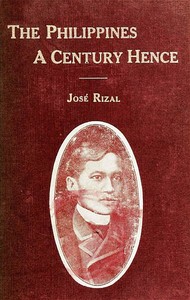
The Philippines a Century Hence
Written by José Rizal
Chaptra reads alongside you — AI insights, chapter breakdowns and reader discussions for every book. Join free
About this book
Reading guide
Themes, characters and key ideas in The Philippines a Century Hence, written by Chaptra AI.
- about 8 hours
- advanced
- prophetic
- analytical
- urgent
José Rizal's "The Philippines a Century Hence" is a foundational political essay from the late 19th century, offering a prescient examination of the Philippines' future under Spanish colonial rule. Originally serialized in "La Solidaridad," the work critically analyzes the historical trajectory and current state of the archipelago, positing various scenarios for its destiny, including continued Spanish dominion, independence, or new foreign subjugation. Rizal argues forcefully for fundamental reforms, advocating for Filipino representation in government and universal education as crucial steps toward national empowerment and self-determination. He warns that persistent oppression will inevitably lead to violent uprisings, urging Spain to adopt a more enlightened and liberal policy to secure goodwill. Ultimately, Rizal's essay stands as a powerful testament to Filipino nationalism, articulating a vision for a unified and progressive nation rooted in its people's dignity and rights.
“"The people do not complain because they have no reason to; they complain because they are hurt."”
Key themes
- Colonialism and its Ill-Effects
- Rizal rigorously critiques Spanish colonialism, detailing how it stifled the Philippines' potential, exploited its resources, and suppressed the intellectual and cultural development of its people. He argues that colonial rule, by its very nature, is unsustainable when met with an awakening national consciousness.
- Nationalism and Self-Determination
- At the heart of the essay is the fervent call for Filipino nationalism and the right to self-determination. Rizal articulates a vision of a unified Filipino people, capable of governing themselves and charting their own destiny, free from foreign imposition. He sees the awakening of national consciousness as an unstoppable force.
- The Power of Education and Enlightenment
- Rizal consistently champions education as the most vital tool for national progress and empowerment. He argues that an educated populace is essential for understanding their rights, participating effectively in governance, and fostering a critical consciousness necessary for societal advancement. He views ignorance as a weapon of oppression.
Worth discussing
How accurate were Rizal's predictions for the Philippines' future, particularly concerning its relationship with Spain and other foreign powers?
Chapter-by-chapter breakdowns, character arcs and the full thematic analysis come with a free account.
Discussions
No one has started one yet
Questions this book opens up
No discussions yet
Be the first to start a discussion about this book!
Sign up to start the discussionReviews
No reviews yet
Be the first to review this book!