
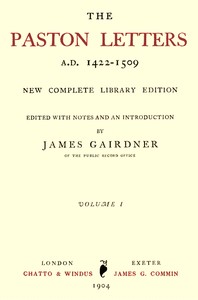
The Paston Letters, A.D. 1422-1509. Volume 1 (of 6): New Complete Library Edition
Written by Unknown author
Chaptra reads alongside you — AI insights, chapter breakdowns and reader discussions for every book. Join free
About this book
Reading guide
Themes, characters and key ideas in The Paston Letters, A.D. 1422-1509. Volume 1 (of 6): New Complete Library Edition, written by Chaptra AI.
- about 20 hours
- advanced
- historical
- informative
- challenging
The Paston Letters, A.D. 1422-1509. Volume 1, offers an unparalleled window into 15th-century English life through the authentic correspondence of the Paston family, a gentry family from Norfolk. This volume initiates the family's story, charting their social ascent from peasant origins to prominent landowners and lawyers amidst the tumultuous backdrop of the Wars of the Roses. Far from a fictional narrative, it presents a raw, unfiltered chronicle of daily existence, legal battles, political maneuvering, and personal relationships, providing invaluable primary source material for historians and a fascinating, if challenging, read for anyone interested in the medieval period.
“I pray you send me word how ye do, and how ye speed in your matters.”
Key themes
- Social Mobility and the Rise of the Gentry
- The Paston family's journey from relatively humble origins to prominent landowners and lawyers exemplifies the social fluidity of late medieval England. The letters meticulously document their strategies for acquiring land, forging alliances, and navigating the complex social hierarchy to secure and enhance their status. This theme is central to understanding the family's motivations and struggles.
- Law, Land, and Property Disputes
- A pervasive theme, reflecting the importance of land as the basis of wealth and power in the 15th century. The letters are filled with detailed accounts of legal battles, lawsuits, and even armed conflicts over property rights. They reveal the often chaotic and violent nature of justice, where legal precedent could be overridden by brute force or political influence.
- Women's Agency and Roles
- Contrary to popular stereotypes, the letters reveal the significant and active roles played by women in 15th-century gentry society. Agnes and Margaret Paston, in particular, emerge as powerful figures who managed estates, conducted business, educated children, and even defended properties in their husbands' absences, demonstrating considerable autonomy and competence.
Worth discussing
How do the Paston Letters challenge or confirm your understanding of 15th-century English society?
Chapter-by-chapter breakdowns, character arcs and the full thematic analysis come with a free account.
Discussions
No one has started one yet
Questions this book opens up
No discussions yet
Be the first to start a discussion about this book!
Sign up to start the discussionReviews
No reviews yet
Be the first to review this book!