
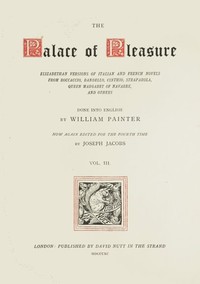
The Palace of Pleasure, Volume 3
Written by Unknown author
Chaptra reads alongside you — AI insights, chapter breakdowns and reader discussions for every book. Join free
About this book
Reading guide
Themes, characters and key ideas in The Palace of Pleasure, Volume 3, written by Chaptra AI.
- about 30 hours
- advanced
- tragic
- dramatic
- intriguing
William Painter's "The Palace of Pleasure" (with Volume 3 representing a significant portion of the complete work) is a seminal collection of over one hundred novellas, tales, and histories primarily translated from Italian, French, and Latin sources during the English Renaissance. It served as a crucial conduit for continental European narratives, introducing a wealth of dramatic plots, moral dilemmas, and romantic tragedies to English readers. The collection explores diverse themes of love, fortune, revenge, and justice, often with a didactic or cautionary tone, reflecting the moral sensibilities of the era. Its enduring legacy lies in its profound influence on Elizabethan playwrights, most notably William Shakespeare, who drew inspiration from its stories for many of his iconic plays.
“"For what is more pleasant to the mind, than to read of the sundry chances of Fortune, the variable successes of Lovers, the policies of Princes, the stratagems of War, and the rare adventures of private persons?"”
Key themes
- Love and Its Consequences
- Love, in its myriad forms – passionate, illicit, fraternal, parental – is perhaps the most central theme. The collection explores the exhilarating joy, consuming jealousy, profound sorrow, and destructive power that love can unleash. It often serves as the primary motivator for character actions, leading to both heroic sacrifices and terrible crimes.
- Fate and Fortune
- This theme explores the overwhelming power of external forces and chance in shaping human lives. Characters frequently find themselves at the mercy of unpredictable events, sudden reversals of fortune, and predetermined destinies, often leading to tragic or unexpected outcomes. The tales frequently emphasize the futility of human planning against the whims of fate.
- Justice and Revenge
- Many narratives in "The Palace of Pleasure" revolve around acts of injustice, betrayal, and the subsequent pursuit of retribution. This theme examines different forms of justice—divine, legal, and personal vengeance—and often questions the morality and efficacy of each. Characters frequently take justice into their own hands, leading to cycles of violence and counter-violence.
Worth discussing
How did 'The Palace of Pleasure' influence the development of English drama, particularly the works of William Shakespeare?
Chapter-by-chapter breakdowns, character arcs and the full thematic analysis come with a free account.
Discussions
No one has started one yet
Questions this book opens up
No discussions yet
Be the first to start a discussion about this book!
Sign up to start the discussionReviews
No reviews yet
Be the first to review this book!