
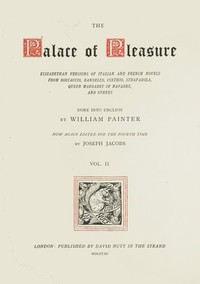
The Palace of Pleasure, Volume 2
Written by Unknown author
Chaptra reads alongside you — AI insights, chapter breakdowns and reader discussions for every book. Join free
About this book
Reading guide
Themes, characters and key ideas in The Palace of Pleasure, Volume 2, written by Chaptra AI.
- about 30 hours
- advanced
- tragic
- dramatic
- historical
William Painter's "The Palace of Pleasure, Volume 2" is a pivotal collection of novellas and short stories, primarily translated from Italian, French, and Latin sources during the Elizabethan era. This volume, like its predecessor, serves as a rich anthology of tragic, romantic, and historical narratives, offering English readers access to a vast array of continental literature, most notably works by Boccaccio, Bandello, and Livy. It explores themes of love, betrayal, fortune, revenge, and the often-grim consequences of human passion and ambition, presented with a didactic undertone characteristic of the period. The collection became a significant sourcebook for many Elizabethan playwrights, including Shakespeare, influencing the development of English drama and prose.
“"For as a man soweth, so shall he reap."”
Key themes
- Fortune and Fate
- A pervasive theme throughout the collection is the arbitrary and often cruel nature of fortune and fate. Many stories illustrate how human plans are thwarted, lives are overturned, and individuals suffer undeservedly due to unforeseen circumstances or the whims of a higher power. This theme underscores the fragility of human existence and the limited control individuals have over their destinies, often leading to tragic outcomes.
- Love and Passion (Tragic Love)
- The destructive and consuming power of love and passion, particularly forbidden or illicit love, is a central theme. Many stories depict individuals driven to extreme actions—betrayal, murder, suicide—by their overwhelming desires. These narratives often highlight the conflict between personal affection and societal norms, family honor, or moral codes, almost invariably leading to tragic consequences for the lovers.
- Revenge and Justice
- Many narratives explore the intricate and often brutal dynamics of revenge and the pursuit of justice. Characters frequently seek retribution for wrongs committed against them or their loved ones, leading to cycles of violence and counter-violence. The collection often questions the nature of justice, demonstrating that acts of revenge, even when seemingly justified, can lead to further suffering and moral compromise, blurring the lines between victim and perpetrator.
Worth discussing
Discuss the role of translation in the development of English literature during the Renaissance, using Painter's work as a primary example.
Chapter-by-chapter breakdowns, character arcs and the full thematic analysis come with a free account.
Discussions
No one has started one yet
Questions this book opens up
No discussions yet
Be the first to start a discussion about this book!
Sign up to start the discussionReviews
No reviews yet
Be the first to review this book!