
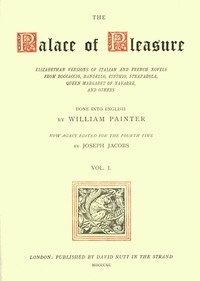
The Palace of Pleasure, Volume 1
Written by Unknown author
Chaptra reads alongside you — AI insights, chapter breakdowns and reader discussions for every book. Join free
About this book
Reading guide
Themes, characters and key ideas in The Palace of Pleasure, Volume 1, written by Chaptra AI.
- about 30 hours
- advanced
- tragic
- dramatic
- moralizing
William Painter's "The Palace of Pleasure, Volume 1" is a seminal collection of one hundred diverse tales, translated from Italian, French, and classical Latin sources, first published in 1566. It served as a crucial conduit for Continental Renaissance narratives into Elizabethan England, introducing English readers to a vast array of tragic, romantic, and historical stories. The volume is less a unified narrative and more a compendium designed for both entertainment and moral instruction, reflecting the literary tastes and ethical concerns of the era. Its enduring significance lies in its profound influence on English literature, particularly as a sourcebook for many Elizabethan playwrights, including William Shakespeare.
“For as the nature of man is prone to pleasure, so is it apt to receive the impression of virtue or vice, as occasion doth serve.”
Key themes
- The Fickleness of Fortune
- A pervasive theme across many tales is the unpredictable and often cruel nature of Fortune. Characters experience sudden reversals of wealth, status, and happiness, demonstrating that human endeavors are often subject to external, uncontrollable forces. This theme underscores the fragility of human existence and the transient nature of worldly success.
- Love and Its Consequences
- Love, in its various forms (romantic, familial, illicit), is a central driving force in many narratives. The collection explores both the ennobling and destructive aspects of passion, often highlighting how intense love can lead to great sacrifice, profound joy, but also devastating jealousy, betrayal, and tragedy. Illicit love, in particular, frequently results in dire consequences.
- Moral Instruction and Exempla
- A primary purpose of 'The Palace of Pleasure' was to provide moral instruction through entertaining narratives. Each story, implicitly or explicitly, serves as an 'exemplum,' illustrating a virtue to be emulated or a vice to be avoided. Painter often interjects his own moralizing comments, guiding the reader towards the intended lesson.
Worth discussing
How does 'The Palace of Pleasure' reflect the moral and aesthetic values of the English Renaissance?
Chapter-by-chapter breakdowns, character arcs and the full thematic analysis come with a free account.
Discussions
No one has started one yet
Questions this book opens up
No discussions yet
Be the first to start a discussion about this book!
Sign up to start the discussionReviews
No reviews yet
Be the first to review this book!