
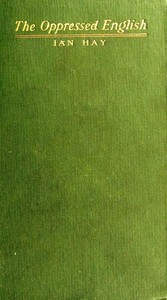
About this book
Reading guide
Themes, characters and key ideas in The Oppressed English, written by Chaptra AI.
- about 8 hours
- intermediate
- humorous
- satirical
- observational
Ian Hay's "The Oppressed English" is an early 20th-century satirical commentary that humorously dissects the international perceptions and internal dynamics of the English people within the British Empire, particularly during World War I. The book ironically posits the English as the unappreciated scapegoats, often blamed for the empire's failures while others claim its successes. Through a series of observations and vignettes, Hay explores the complex English identity, highlighting their perceived modesty and reservation against external stereotypes of arrogance. It ultimately paints a picture of the English as a misunderstood nation, navigating cultural misunderstandings and national pride amidst shifting imperial relationships.
“"It is the peculiar fate of the Englishman to be held responsible for all that is disagreeable in the world, while others are allowed to claim the credit for its occasional felicities."”
Key themes
- Cultural Misunderstanding and Stereotypes
- The core of the book explores how different nationalities (Americans, Scots, Irish) perceive the English, often through the lens of reductive stereotypes (arrogant, dull, reserved). Hay contrasts these external perceptions with an 'authentic' English character, highlighting the humor and frustration arising from these misunderstandings. He critiques the superficiality of these judgments and argues for a deeper appreciation of English subtlety.
- English Identity and Self-Perception
- The book delves into what it means to be English, particularly during a period of imperial decline and global conflict. Hay attempts to define the English character, emphasizing traits like modesty, resilience, a sense of duty, and a quiet patriotism, often in contrast to more overt national expressions. It's a self-reflective work that seeks to clarify and defend the national psyche.
- The Irony of Imperial Power and Scapegoating
- Hay explores the ironic position of the English within their own empire – ostensibly the dominant power, yet paradoxically portrayed as the 'oppressed' or scapegoated party. The book suggests that the English are often held solely responsible for the negative aspects of imperial rule, while other nations within the empire or international observers conveniently forget their own complicity or claim successes. This highlights the selective memory and political expediency inherent in national narratives.
Worth discussing
How does Hay use satire and irony to make his arguments about English identity and imperial relationships?
Chapter-by-chapter breakdowns, character arcs and the full thematic analysis come with a free account.
Discussions
No one has started one yet
Questions this book opens up
No discussions yet
Be the first to start a discussion about this book!
Sign up to start the discussionReviews
No reviews yet
Be the first to review this book!