
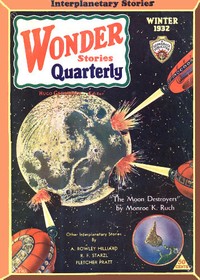
The Onslaught from Rigel
Written by Fletcher Pratt
Chaptra reads alongside you — AI insights, chapter breakdowns and reader discussions for every book. Join free
About this book
Reading guide
Themes, characters and key ideas in The Onslaught from Rigel, written by Chaptra AI.
- about 8 hours
- intermediate
- dark
- mysterious
- perilous
Fletcher Pratt's "The Onslaught from Rigel" plunges humanity into a post-apocalyptic world after a radioactive comet transforms people into metallic beings. The narrative follows Murray Lee and Benjamin Franklin Ruby, who awaken to find themselves radically altered and must grapple with their new, machine-like existence. As they explore a desolate Earth, encountering both remnants of previous life and other transformed survivors, they are forced to form a community and strategize against a new dominant species: hostile avian creatures known as tetrapteryxes. The story chronicles their perilous journey of adaptation, survival, and the struggle to retain their identity in a world utterly reshaped by a cosmic catastrophe.
Key themes
- Adaptation and Survival
- This is the core theme of the novel, exploring how humanity, in its radically altered metallic form, must adapt to an entirely new world order. It encompasses both the physical adaptation to new bodies and the strategic adaptation required to survive against new predators and environmental challenges.
- Loss of Humanity and Identity
- The transformation into metallic beings poses a profound question about what constitutes 'humanity.' This theme explores the psychological impact of losing one's original form and identity, and the struggle to define oneself in a fundamentally altered state.
- Post-Apocalyptic World and Ecological Shift
- The novel vividly portrays a world devastated by a cosmic event, where the previous ecological hierarchy has been completely inverted. Humanity is no longer dominant, and a new species of avian predators now controls the planet, highlighting nature's capacity for radical change.
Worth discussing
How does the metallic transformation affect the characters' sense of identity and humanity? Is humanity defined by form or consciousness?
Chapter-by-chapter breakdowns, character arcs and the full thematic analysis come with a free account.
Discussions
No one has started one yet
Questions this book opens up
No discussions yet
Be the first to start a discussion about this book!
Sign up to start the discussionReviews
No reviews yet
Be the first to review this book!