
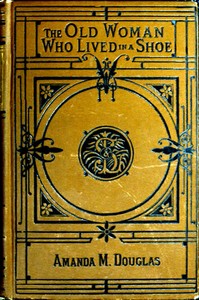
The Old Woman Who Lived in a Shoe; Or, There's No Place Like Home
Written by Amanda M. Douglas
Chaptra reads alongside you — AI insights, chapter breakdowns and reader discussions for every book. Join free
About this book
Reading guide
Themes, characters and key ideas in The Old Woman Who Lived in a Shoe; Or, There's No Place Like Home, written by Chaptra AI.
- about 8 hours
- intermediate
- uplifting
- sentimental
- moralistic
Amanda M. Douglas's "The Old Woman Who Lived in a Shoe; Or, There's No Place Like Home" reimagines the classic nursery rhyme as a poignant 19th-century domestic novel. It follows the virtuous but impoverished Mrs. Eleanor Vance, a widow struggling to raise her numerous children in a dilapidated dwelling, metaphorically her 'shoe.' The narrative explores her unwavering maternal love, resilience in the face of destitution, and the profound importance of home and community. Through a series of trials and small triumphs, the story champions the virtues of hard work, charity, and faith, ultimately affirming that true wealth lies in family bonds and a stable, loving environment, regardless of its grandeur.
“"A home, however humble, is a kingdom when love reigns within its walls."”
Key themes
- The Sanctity of Home
- This theme is central to the novel, explicitly stated in the subtitle. It explores the idea that 'home' is not merely a physical structure but a spiritual and emotional haven, built on love, familial bonds, and shared experiences. Despite the Vance family's impoverished dwelling, it is sanctified by their mutual affection and Mrs. Vance's tireless efforts to create a nurturing environment. The narrative consistently reinforces the idea that true wealth lies in a loving home, regardless of its material grandeur.
- Resilience in Adversity
- The novel is a testament to the human spirit's capacity to endure and overcome immense challenges. Mrs. Vance and her children face destitution, illness, and societal indifference, yet they meet each trial with courage, perseverance, and unwavering hope. This theme highlights the inner strength derived from faith, familial love, and a strong moral compass, portraying hardship not as a curse, but as a forge for character.
- Maternal Love and Sacrifice
- Mrs. Vance's character is the embodiment of unconditional maternal love and boundless self-sacrifice. Her every action, thought, and prayer is directed towards the well-being and moral upbringing of her children. The novel elevates the daily tasks of motherhood—feeding, clothing, educating, comforting—into acts of profound devotion, showcasing the immense power and influence of a mother's love in shaping a family's destiny, especially in the face of poverty.
Worth discussing
How does Douglas transform the simplicity of the 'Old Woman in a Shoe' nursery rhyme into a complex narrative about domestic life and hardship?
Chapter-by-chapter breakdowns, character arcs and the full thematic analysis come with a free account.
Discussions
No one has started one yet
Questions this book opens up
No discussions yet
Be the first to start a discussion about this book!
Sign up to start the discussionReviews
No reviews yet
Be the first to review this book!