
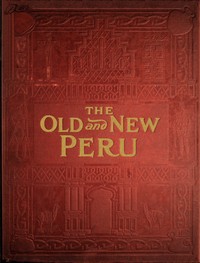
The old and the new Peru : $b A story of the ancient inheritance and the modern growth and enterprise of a great nation
Written by Marie Robinson Wright
Chaptra reads alongside you — AI insights, chapter breakdowns and reader discussions for every book. Join free
About this book
Reading guide
Themes, characters and key ideas in The old and the new Peru : $b A story of the ancient inheritance and the modern growth and enterprise of a great nation, written by Chaptra AI.
- about 12 hours
- intermediate
- informative
- historical
- exploratory
Marie Robinson Wright's "The Old and the New Peru" is an early 20th-century historical account that meticulously traces Peru's evolution from its profound ancient civilizations to its burgeoning modern identity. The book navigates the rich tapestry of pre-Columbian cultures, most notably the Inca Empire, and examines the subsequent transformations that shaped the nation's political, social, and economic landscape. Wright emphasizes the enduring legacy of Peru's archaeological treasures while simultaneously highlighting the country's contemporary progress and enterprise. It serves as a comprehensive narrative bridging the gap between a storied past and a dynamic present, offering insights into the forces that define Peruvian nationhood.
“Peru, a land where the echoes of an empire's grandeur mingle with the vibrant pulse of modern ambition, stands as a testament to humanity's enduring spirit.”
Key themes
- Ancient Inheritance vs. Modern Progress
- This is the core dichotomy and central theme of the book, exploring how Peru's deep historical roots and pre-Columbian achievements inform and contrast with its contemporary development and aspirations. Wright constantly juxtaposes the grandeur of the Inca Empire and other ancient cultures with the nation's efforts towards modernization, industrialization, and political stability in the early 20th century.
- Peruvian National Identity and Greatness
- The book explicitly aims to tell 'A story of the ancient inheritance and the modern growth and enterprise of a great nation.' This theme explores how Wright constructs and celebrates Peruvian national identity, drawing on both its illustrious pre-Columbian past and its perceived progress in the early 20th century. It emphasizes a sense of pride in Peru's unique history, cultural richness, and potential.
- The Significance of Archaeological Exploration
- The opening portions of the book heavily emphasize the role of archaeological exploration in uncovering Peru's past. This theme highlights the importance of material culture and scientific inquiry in understanding ancient civilizations and their contribution to the modern nation's identity. It underscores the idea that the past is not merely forgotten but actively discovered and interpreted.
Worth discussing
How does Wright balance the narrative between Peru's 'ancient inheritance' and its 'modern growth and enterprise'? Is one given more emphasis than the other?
Chapter-by-chapter breakdowns, character arcs and the full thematic analysis come with a free account.
Discussions
No one has started one yet
Questions this book opens up
No discussions yet
Be the first to start a discussion about this book!
Sign up to start the discussionReviews
No reviews yet
Be the first to review this book!