
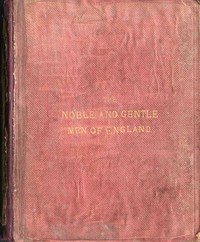
The Noble and Gentle Men of England: or, notes touching the arms and descents of the ancient knightly and gentle houses of England, arranged in their respective counties.
Written by Evelyn Philip Shirley
Chaptra reads alongside you — AI insights, chapter breakdowns and reader discussions for every book. Join free
About this book
Reading guide
Themes, characters and key ideas in The Noble and Gentle Men of England: or, notes touching the arms and descents of the ancient knightly and gentle houses of England, arranged in their respective counties., written by Chaptra AI.
- about 80 hours
- advanced
- academic
- meticulous
- authoritative
Evelyn Philip Shirley's "The Noble and Gentle Men of England" is a meticulous 19th-century genealogical and historical compendium. It systematically documents the arms and descents of ancient knightly and gentle families across England, organized by county, primarily focusing on those established before the 16th century. The work serves as a significant reference for understanding the historical social structure and aristocratic lineage of England, laying out rigorous criteria for inclusion based on direct male descent and long-standing ties to land. Shirley's introduction outlines his methodology, acknowledging the complexities and limitations inherent in genealogical research, and referencing a wide array of historical sources to substantiate his claims. This extensive survey provides invaluable insights into the enduring legacy of England's gentry and nobility.
“It has been the Author's endeavour to trace, as far as possible, the male descent of those families who were settled in England before the commencement of the sixteenth century, and whose representatives are still existing in the male line.”
Key themes
- Lineage and Continuity
- This is the central theme, exploring the unbroken chain of male descent as the primary determinant of aristocratic identity and status. The book meticulously traces family lines over centuries, emphasizing the importance of ancestral ties in maintaining social position and historical presence. It highlights how families sought to establish and prove their ancient lineage to validate their 'gentle' status.
- Land and Identity
- The theme of land ownership is inextricably linked to the identity and status of the noble and gentle families. The book implicitly argues that long-standing ties to specific territories or estates were crucial for establishing and maintaining a family's ancient standing. Land was not just an economic asset but a symbol of power, continuity, and belonging, forming the bedrock of aristocratic identity.
- Social Hierarchy and Gentility
- The work serves as a detailed exploration of England's historical social hierarchy, specifically focusing on the 'noble and gentle' classes. It defines what constituted gentility in previous centuries, not just by title but by long-established lineage, heraldry, and land. It highlights the distinctions within the aristocracy and the criteria by which families claimed and maintained their elite status, revealing the intricate stratification of historical English society.
Worth discussing
How does Shirley's methodology reflect 19th-century understandings of aristocracy and historical research?
Chapter-by-chapter breakdowns, character arcs and the full thematic analysis come with a free account.
Discussions
No one has started one yet
Questions this book opens up
No discussions yet
Be the first to start a discussion about this book!
Sign up to start the discussionReviews
No reviews yet
Be the first to review this book!