
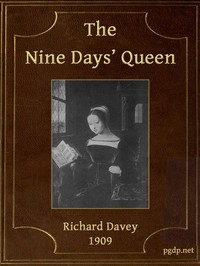
The Nine Days' Queen, Lady Jane Grey, and Her Times
Written by Richard Davey
Chaptra reads alongside you — AI insights, chapter breakdowns and reader discussions for every book. Join free
About this book
Reading guide
Themes, characters and key ideas in The Nine Days' Queen, Lady Jane Grey, and Her Times, written by Chaptra AI.
- about 10 hours
- advanced
- tragic
- historical
- somber
Richard Davey's "The Nine Days' Queen, Lady Jane Grey, and Her Times" offers a meticulous early 20th-century historical account of Lady Jane Grey's brief, tragic reign. The book intricately details the political machinations, familial alliances, and religious tensions of the Tudor era that led to Jane's reluctant ascension to the English throne. Beginning with her early life at Bradgate Manor and emphasizing her noble lineage, Davey paints a vivid picture of the forces that shaped her destiny. Ultimately, the narrative explores the profound personal and political turmoil Jane navigated, culminating in her historic nine-day queenship and subsequent execution, providing a comprehensive look at both the individual and her defining historical context.
“"In the quietude of Bradgate Manor, far from the clamor of court, a mind of singular brilliance was forged, destined for a crown it never sought."”
Key themes
- The Perilous Nature of Power and Ambition
- The book meticulously details how the insatiable ambition of figures like John Dudley, Duke of Northumberland, directly leads to the tragic downfall of Lady Jane Grey and ultimately himself. It illustrates how the pursuit of power in Tudor England was a cutthroat game, where loyalty was fluid and the stakes were always life or death. Jane herself becomes a pawn in this larger game, highlighting the corrupting and destructive potential of unchecked ambition.
- Fate vs. Free Will
- Lady Jane Grey's story is presented as a profound exploration of whether individuals can truly control their destiny, or if they are merely instruments of larger historical forces. Jane is depicted as an unwilling queen, thrust into a role she never desired, suggesting that her fate was largely predetermined by her noble birth and the political climate of her time. Her choices are often reactions to circumstances, yet her final refusal to compromise her faith demonstrates a powerful act of free will.
- Religious Conflict and Persecution
- The book vividly portrays the intense religious divisions of 16th-century England, primarily between Protestantism and Catholicism. Lady Jane Grey's devout Protestantism is a defining characteristic, influencing her education, her political alignment (through Northumberland), and ultimately her refusal to convert, which seals her fate under the Catholic Queen Mary. The conflict is not merely theological but deeply political, shaping alliances and justifications for succession.
Worth discussing
To what extent was Lady Jane Grey a willing participant in the plot to place her on the throne, or merely a pawn of ambitious men?
Chapter-by-chapter breakdowns, character arcs and the full thematic analysis come with a free account.
Discussions
No one has started one yet
Questions this book opens up
No discussions yet
Be the first to start a discussion about this book!
Sign up to start the discussionReviews
No reviews yet
Be the first to review this book!