
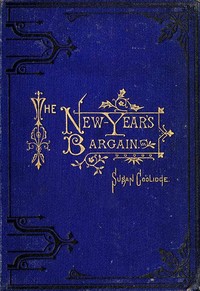
The New-Year's Bargain
Written by Susan Coolidge
Chaptra reads alongside you — AI insights, chapter breakdowns and reader discussions for every book. Join free
About this book
Reading guide
Themes, characters and key ideas in The New-Year's Bargain, written by Chaptra AI.
- about 8 hours
- intermediate
- whimsical
- imaginative
- gentle
Susan Coolidge's "The New-Year's Bargain" is a whimsical children's novel set in the Black Forest, where two imaginative children, Max and Thekla, encounter the personified Old Time. Their mischievous theft of 'sand of time' leads to a unique agreement: each of the twelve personified months will visit them throughout the year, sharing stories and offering gifts. This charming premise unfolds into a series of episodic adventures, blending fantasy with gentle moral lessons about the passage of time, the beauty of the seasons, and the importance of responsibility and gratitude. The narrative creates a magical world where time itself becomes a teacher, guiding the children through a year of discovery and growth.
“"Ah, little ones, time is a precious thing, not to be stolen or wasted, for every grain of sand holds a moment that cannot be reclaimed."”
Key themes
- The Passage of Time and Seasons
- Central to the narrative, this theme explores the cyclical nature of time, the distinct characteristics of each season, and the inevitability of change. The personification of Old Time and the twelve months directly embodies this theme, allowing for a tangible exploration of an abstract concept. Each month's visit highlights the unique gifts and lessons inherent in different periods of the year.
- Responsibility and Consequences
- This theme is immediately established by Max's mischievous act of stealing the 'sand of time' and the subsequent need for restitution. The entire 'bargain' with the months serves as a prolonged lesson in taking responsibility for one's actions, understanding their impact, and fulfilling obligations. It teaches that every action, no matter how small, has a ripple effect.
- Imagination and Wonder
- The entire premise of the story—encountering personified time and months—is an ode to the power of imagination. The narrative encourages readers to see the world through a lens of wonder, transforming abstract concepts and natural phenomena into vibrant, living characters. It celebrates the imaginative capacity of children and the magic that can be found in everyday life and the natural world.
Worth discussing
How does the personification of Old Time and the months enhance the story's themes?
Chapter-by-chapter breakdowns, character arcs and the full thematic analysis come with a free account.
Discussions
No one has started one yet
Questions this book opens up
No discussions yet
Be the first to start a discussion about this book!
Sign up to start the discussionReviews
No reviews yet
Be the first to review this book!