
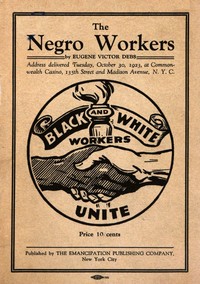
The negro workers : $b address delivered Tuesday, October 30, 1923, at Commonwealth Casino, 135th Street and Madison Avenue, N.Y.C.
Written by Eugene V. (Eugene Victor) Debs
Chaptra reads alongside you — AI insights, chapter breakdowns and reader discussions for every book. Join free
About this book
Reading guide
Themes, characters and key ideas in The negro workers : $b address delivered Tuesday, October 30, 1923, at Commonwealth Casino, 135th Street and Madison Avenue, N.Y.C., written by Chaptra AI.
- about 8 hours
- intermediate
- Inspirational
- Passionate
- Didactic
Eugene V. Debs's 1923 address, "The Negro Workers," is a powerful and impassioned call for racial equality and class solidarity within the American labor movement. Delivered amidst widespread racial discrimination, Debs critiques the historical injustices faced by African Americans, framing their struggle as integral to the broader fight against capitalist exploitation. He advocates for the unity of all workers, regardless of race, urging them to reject established political parties and form an independent, militant labor movement. The speech stands as a testament to Debs's unwavering commitment to socialist principles and his vision for a society free from both racial and economic oppression.
“The cause of the colored worker is the cause of all workers, for an injury to one is an injury to all.”
Key themes
- Racial Equality and Justice
- This theme is central, as Debs directly addresses the historical injustices and systemic racism faced by African Americans. He argues for their full and equal rights, emphasizing that racial discrimination is not only morally wrong but also a tool used to divide the working class, thereby hindering overall progress.
- Class Struggle and Solidarity
- Debs frames racial oppression as inextricably linked to the capitalist class struggle. He posits that the capitalist system exploits all workers, regardless of race, and uses racial division to maintain its power. Therefore, true liberation requires solidarity among all workers to challenge the capitalist elite.
- Socialism vs. Capitalism
- Debs, a staunch socialist, explicitly advocates for a socialist alternative to the capitalist system, which he views as inherently exploitative and a root cause of both economic and racial injustice. He presents socialism as the path to true equality and freedom for all workers.
Worth discussing
How does Debs connect racial oppression with economic exploitation, and what is the significance of this connection for understanding systemic injustice?
Chapter-by-chapter breakdowns, character arcs and the full thematic analysis come with a free account.
Discussions
No one has started one yet
Questions this book opens up
No discussions yet
Be the first to start a discussion about this book!
Sign up to start the discussionReviews
No reviews yet
Be the first to review this book!