
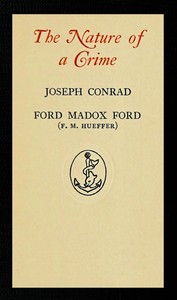
The nature of a crime
Written by Joseph Conrad,Ford Madox Ford
Chaptra reads alongside you — AI insights, chapter breakdowns and reader discussions for every book. Join free
About this book
Reading guide
Themes, characters and key ideas in The nature of a crime, written by Chaptra AI.
- about 10 hours
- advanced
- introspective
- melancholy
- psychological
"The Nature of a Crime," a collaborative novel by Joseph Conrad and Ford Madox Ford, is a profound psychological exploration of identity, morality, and the repercussions of one's actions, set in the early 20th century. The narrative centers on a protagonist grappling with intense love, existential despair, and a looming significant decision, all while reflecting on a deep emotional bond with a woman. Burdened by societal constraints and a sense of purpose, he confronts an inner conflict that hints at a 'crime' – possibly literal, but more profoundly metaphorical – tied to secrecy and mortality. The novel unfolds as an intricate journey into the characters' memories and emotions, inviting readers to delve into the complex moral landscape of their lives.
“"The greatest crimes are not those against the law, but against the self, against the very nature of one's own being."”
Key themes
- The Nature of Crime and Guilt
- The central theme explores crime not merely as a legal offense but as a profound moral and psychological transgression. The narrative delves into the protagonist's internal struggle with guilt, secrecy, and the consequences of actions that defy societal norms or personal ethics. It questions what truly constitutes a 'crime' and how it impacts the individual's conscience and identity, suggesting that the most damaging crimes are often those committed within the self.
- Identity and Purpose
- The protagonist grapples intensely with his sense of purpose and identity, which is deeply intertwined with his emotional bond and the 'crime' he contemplates or has committed. The novel explores how external societal pressures and internal moral conflicts can fragment one's sense of self, leading to existential despair. The search for meaning in a life constrained by secrets and unconventional love is a driving force.
- Love, Passion, and Societal Constraints
- The novel explores the intense, often illicit, nature of love and passion when confronted with the rigid expectations and moral judgments of society. The 'deep emotional bond' between the protagonist and the woman forms the core of this theme, highlighting the sacrifices, compromises, and potential transgressions required to sustain such a relationship outside conventional boundaries. It examines the tension between individual desire and social conformity, and the heavy price paid for pursuing unconventional love.
Worth discussing
How does the novel define 'crime,' and is it primarily a legal, moral, or psychological transgression?
Chapter-by-chapter breakdowns, character arcs and the full thematic analysis come with a free account.
Discussions
No one has started one yet
Questions this book opens up
No discussions yet
Be the first to start a discussion about this book!
Sign up to start the discussionReviews
No reviews yet
Be the first to review this book!