
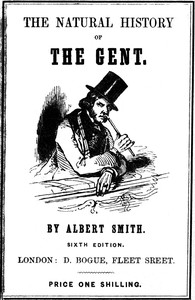
The Natural History of the Gent
Written by Albert Smith
Chaptra reads alongside you — AI insights, chapter breakdowns and reader discussions for every book. Join free
About this book
Reading guide
Themes, characters and key ideas in The Natural History of the Gent, written by Chaptra AI.
- about 8 hours
- intermediate
- humorous
- satirical
- observational
Albert Smith's "The Natural History of the Gent" is a sharp, mid-19th-century satirical commentary dissecting the superficialities and pretensions of a specific class of Victorian Londoners known as "Gents." Through a series of humorous observations and vivid anecdotes, Smith meticulously exposes their attempts to appear stylish and sophisticated despite lacking genuine gentlemanly qualities. The book scrutinizes their fashion choices, social customs, and public behaviors across various settings, highlighting the absurd disconnect between their aspirations and their true social standing. Ultimately, this work serves as both an entertaining critique of a particular social stratum and a broader, timeless commentary on human vanity and the universal quest for status through outward display.
“The Gent, a creature of habit and outward show, is seldom found where true distinction resides.”
Key themes
- Social Pretense and Superficiality
- This is the core theme, explored through the Gents' relentless pursuit of outward appearances and their attempts to project an image of sophistication they do not genuinely possess. Smith highlights the absurdity of valuing surface-level attributes over genuine character and intellect, critiquing a society that often rewards such pretense.
- The Definition of a 'Gentleman'
- Smith implicitly and explicitly questions what truly constitutes a 'gentleman,' contrasting the Gent's superficiality with an unspoken ideal of genuine refinement, moral character, and intellectual depth. The book explores how outward displays of wealth or fashion do not equate to true gentility.
- Class Anxiety and Social Mobility
- The Gents' behaviors can be seen as symptomatic of Victorian class anxieties, particularly among the aspiring middle classes seeking to emulate the aristocracy. Their exaggerated attempts at sophistication reveal an insecurity about their social standing and a desire to climb the social ladder through mimicry rather than genuine achievement or inherited status.
Worth discussing
How does Smith's definition of a 'Gent' compare to your understanding of a 'gentleman' today? Are there modern equivalents to the 'Gent'?
Chapter-by-chapter breakdowns, character arcs and the full thematic analysis come with a free account.
Discussions
No one has started one yet
Questions this book opens up
No discussions yet
Be the first to start a discussion about this book!
Sign up to start the discussionReviews
No reviews yet
Be the first to review this book!