
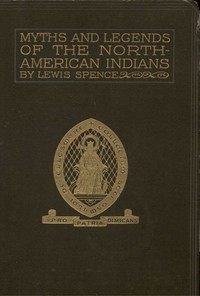
The Myths of the North American Indians
Written by Lewis Spence
Chaptra reads alongside you — AI insights, chapter breakdowns and reader discussions for every book. Join free
About this book
Read it with a club
Small groups reading the same books and talking as they go.


News
- 4 members
- 1,813 discussions
- Active Sep 11
Read The Myths of the North American Indians alongside people who are reading it too.
Also here: News Bulletin, Just Joking....
Chaptra Prime — paid clubs, every club feature, and unlimited reading support, for $5 a month or $60 once.
See PrimeReading guide
Themes, characters and key ideas in The Myths of the North American Indians, written by Chaptra AI.
- about 18 hours
- advanced
- informative
- scholarly
- analytical
Lewis Spence's "The Myths of the North American Indians" is an early 20th-century scholarly endeavor to document and analyze the rich mythologies of various Indigenous peoples across North America. The book critiques historical European neglect and misunderstanding of these traditions, advocating for a deeper appreciation of Native American worldviews. Spence aims to provide a comprehensive overview, blending ethnological and historical insights while highlighting the profound influence of environmental factors on myth development. It serves as a foundational text in the study of North American Indigenous cultures, emphasizing the unique cultural contexts from which these narratives emerged. Ultimately, the work seeks to correct misconceptions and establish a more respectful understanding of these complex belief systems.
“The mind of the Red Man, in common with that of primitive races all over the globe, presents a distinct psychological problem, which must be thoroughly understood if his mythology is to be in any way appreciated.”
Key themes
- The Distinctiveness of Indigenous Worldviews
- This theme explores Spence's central argument that North American Indigenous mythologies are rooted in unique philosophical and spiritual frameworks fundamentally different from European thought. He emphasizes that understanding these myths requires shedding preconceived notions and appreciating the inherent logic and coherence within Indigenous belief systems, often tied to a holistic relationship with nature and the cosmos.
- The Power and Purpose of Myth
- Spence's work implicitly and explicitly explores the fundamental human need for myth-making. This theme delves into how myths serve as foundational narratives that explain the origins of the world, humanity, and cultural practices; establish moral codes; provide spiritual guidance; and offer a framework for understanding existence and humanity's place within it. They are not mere stories but vital components of social cohesion and individual identity.
- The Influence of Environment on Myth
- Spence consistently argues that the geographical and environmental conditions in which a tribe lived profoundly shaped their mythological narratives. This theme examines how landscape, climate, flora, and fauna directly inspired creation stories, deities, culture heroes, and explanations for natural phenomena, illustrating an intimate connection between people, place, and spiritual belief.
Worth discussing
How does Spence's early 20th-century approach to Indigenous mythology compare to contemporary anthropological methods? What are the key differences and why?
Chapter-by-chapter breakdowns, character arcs and the full thematic analysis come with a free account.
Discussions
No one has started one yet
Questions this book opens up
No discussions yet
Be the first to start a discussion about this book!
Sign up to start the discussionReviews
No reviews yet
Be the first to review this book!