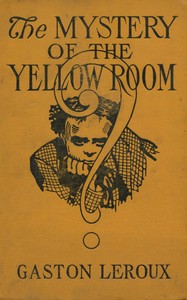
The Mystery of the Yellow Room
Written by Gaston Leroux
Chaptra reads alongside you — AI insights, chapter breakdowns and reader discussions for every book. Join free
About this book
Reading guide
Themes, characters and key ideas in The Mystery of the Yellow Room, written by Chaptra AI.
- about 8 hours
- intermediate
- mysterious
- intellectual
- suspenseful
Gaston Leroux's 'The Mystery of the Yellow Room' is a seminal work in the 'locked-room mystery' subgenre, challenging readers with an seemingly impossible crime. Set in a secluded French château, the narrative follows young journalist-detective Joseph Rouletabille as he investigates the brutal attack on Mathilde Stangerson within a locked room, from which the assailant vanished without a trace. The novel intricately weaves together scientific principles, psychological insights, and sheer deductive brilliance to unravel a complex web of deception, mistaken identities, and long-held secrets. It stands as a testament to the power of pure logic and observation against the backdrop of seemingly supernatural occurrences, influencing countless detective stories that followed.
“The murderer is not outside!”
Key themes
- The Locked Room Mystery
- This is the central theme and structural device of the novel. The seemingly impossible crime—an attack in a room locked from the inside, with no apparent exit for the assailant—challenges the limits of human reason and physical possibility. Leroux meticulously constructs the impossibility and then brilliantly provides a rational, albeit complex, explanation, setting a benchmark for the subgenre.
- Reason vs. Intuition (and Conventional vs. Unconventional Detection)
- The novel pits the established, methodical approach of Inspector Larsan against the youthful, intuitive, and purely logical deductions of Joseph Rouletabille. This theme explores the idea that true genius often lies outside conventional frameworks and that sometimes, the most 'impossible' solutions are the most logical. It questions the limitations of traditional police work when confronted with extraordinary circumstances.
- The Nature of Truth and Illusion
- Leroux constantly plays with the reader's perception, presenting facts that seem irrefutable but are later revealed to be carefully constructed deceptions or misinterpretations. The novel explores how easily human beings can be fooled by appearances and how difficult it is to discern the absolute truth when faced with a master manipulator.
Worth discussing
How does Leroux subvert reader expectations regarding the 'locked-room' premise? What makes his solution particularly ingenious?
Chapter-by-chapter breakdowns, character arcs and the full thematic analysis come with a free account.
Discussions
No one has started one yet
Questions this book opens up
No discussions yet
Be the first to start a discussion about this book!
Sign up to start the discussionReviews
No reviews yet
Be the first to review this book!