
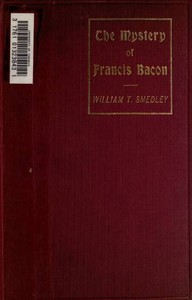
The Mystery of Francis Bacon
Written by William T. (William Thomas) Smedley
Chaptra reads alongside you — AI insights, chapter breakdowns and reader discussions for every book. Join free
About this book
Reading guide
Themes, characters and key ideas in The Mystery of Francis Bacon, written by Chaptra AI.
- about 10 hours
- advanced
- mysterious
- investigative
- scholarly
William T. Smedley's "The Mystery of Francis Bacon" is an early 20th-century historical inquiry that meticulously examines the enigmatic life and legacy of Francis Bacon, a pivotal figure in philosophy and statesmanship. The book confronts the historical tension between Bacon's monumental intellectual contributions and his tarnished reputation as a corrupt official, seeking to reconcile these seemingly contradictory aspects of his character. Smedley embarks on an investigative journey to uncover lesser-known details of Bacon's early life and literary activities, challenging conventional historical narratives. A central hypothesis of the work posits that Bacon may have deliberately concealed his authorial identity, a revelation Smedley believes is key to a fuller understanding of his vast contributions to both literature and philosophy. The book ultimately aims to revise Bacon's historical standing by shedding light on the complexities and potential misinterpretations surrounding his public and private life.
“"The greatest minds are often the most misunderstood by posterity, their true motives shrouded in the mists of time and misinterpretation."”
Key themes
- Historical Revisionism and Interpretation
- The book fundamentally questions how history is written, interpreted, and perpetuated. Smedley actively seeks to revise the prevailing narrative surrounding Francis Bacon, arguing that later historians have unfairly vilified him. This theme explores the subjective nature of historical accounts and the possibility of uncovering alternative truths through critical re-examination of sources.
- Authorship and Identity
- A core theme, Smedley investigates the possibility that Francis Bacon deliberately concealed his authorial identity for some of his literary work. This raises profound questions about the nature of literary ownership, the societal pressures that might compel an author to remain anonymous, and how such concealment impacts our understanding of a figure's full contributions and true self.
- The Nature of Genius
- Smedley delves into the complexities of genius, particularly how immense intellectual capability can coexist with, or be perceived to be contradicted by, moral or political failings. The book explores whether society is equipped to understand or justly judge figures whose contributions transcend their personal imperfections, or whether the two are inextricably linked.
Worth discussing
How does Smedley challenge the traditional historical narrative of Francis Bacon? What evidence does he present?
Chapter-by-chapter breakdowns, character arcs and the full thematic analysis come with a free account.
Discussions
No one has started one yet
Questions this book opens up
No discussions yet
Be the first to start a discussion about this book!
Sign up to start the discussionReviews
No reviews yet
Be the first to review this book!