
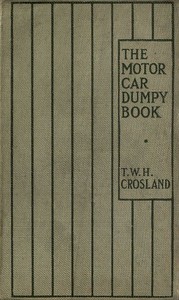
The Motor Car Dumpy Book
Written by T. W. H. (Thomas William Hodgson) Crosland
Chaptra reads alongside you — AI insights, chapter breakdowns and reader discussions for every book. Join free
About this book
Reading guide
Themes, characters and key ideas in The Motor Car Dumpy Book, written by Chaptra AI.
- about 1 hours
- beginner
- charming
- educational
- nostalgic
T. W. H. Crosland's "The Motor Car Dumpy Book" is a charming early 20th-century children's illustrated book that serves as an educational and entertaining introduction to the burgeoning world of automobiles. Through playful text and vivid illustrations, it explores the mechanics and societal impact of motor vehicles, ranging from cars and motor bicycles to even a motor airship. The book delves into aspects of early motor culture, discussing roles like chauffeurs and policemen, emphasizing safety, and capturing the excitement of motor races. It provides young readers with an accessible, light-hearted, and historically significant glimpse into the fascination with motor technology during the early 1900s.
“"See the motor car, swift and grand, a wonder across the land!"”
Key themes
- Technological Advancement and Innovation
- This theme is central to the entire book, celebrating the ingenuity behind motor vehicles and their diverse applications. It showcases the excitement and wonder associated with new inventions during a period of rapid industrial and technological growth. The book introduces children to various types of motor transport, from common cars to more speculative designs, fostering an appreciation for human inventiveness.
- Societal Change and Adaptation
- The book explores how the motor car reshaped daily life, introducing new professions (like chauffeurs) and necessitating new rules and roles (like policemen regulating traffic). It implicitly depicts the shift from horse-drawn transport to motorized vehicles, highlighting the profound impact on urban planning, leisure, and the pace of life.
- Childhood Education and Curiosity
- The book's primary function is to educate and entertain young readers, tapping into their natural curiosity about the world around them. It simplifies complex mechanical concepts and societal roles, making them accessible and fostering a sense of wonder and understanding about a new and exciting invention. It reflects an era where children's literature often served a direct instructional purpose.
Worth discussing
How did the introduction of motor cars change daily life and society in the early 1900s, as depicted in the book?
Chapter-by-chapter breakdowns, character arcs and the full thematic analysis come with a free account.
Discussions
No one has started one yet
Questions this book opens up
No discussions yet
Be the first to start a discussion about this book!
Sign up to start the discussionReviews
No reviews yet
Be the first to review this book!