
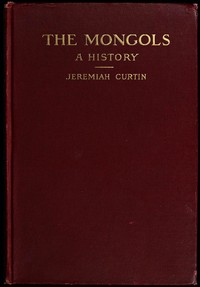
The Mongols : $b A history
Written by Jeremiah Curtin
Chaptra reads alongside you — AI insights, chapter breakdowns and reader discussions for every book. Join free
About this book
Reading guide
Themes, characters and key ideas in The Mongols : $b A history, written by Chaptra AI.
- about 25 hours
- advanced
- historical
- epic
- brutal
Jeremiah Curtin's "The Mongols: A History" offers an early 20th-century exploration into the formidable rise and expansive reach of the Mongol Empire. The book meticulously chronicles the journey from the challenging origins of various nomadic tribes to their unification under the visionary leadership of Temudjin, who would become Genghis Khan. It details the empire's profound impact on both Asian and European civilizations, tracing its legendary conquests and the subsequent territorial and cultural transformations. Curtin also delves into the intricate cultural, social, and political dynamics that shaped the Mongol identity and their fierce warrior ethos, providing a comprehensive historical narrative for its time.
“"The term 'Mongol' itself carries a history as vast and complex as the empire it came to define, evolving from tribal designation to a global descriptor of power and terror."”
Key themes
- Power and Conquest
- This theme explores the mechanisms of acquiring, consolidating, and wielding power through military conquest. Curtin meticulously details the strategies, tactics, and sheer brutality involved in the Mongol expansion, examining how their military machine enabled them to subjugate vast territories and diverse peoples. It also touches upon the challenges of maintaining such a vast empire.
- Leadership and Vision
- The book places significant emphasis on the role of extraordinary leadership, particularly that of Genghis Khan, in transforming a disparate collection of tribes into a formidable empire. It analyzes his strategic genius, his ability to inspire loyalty, and his long-term vision for a unified Mongol nation that transcended immediate tribal interests.
- Cultural Identity and Adaptation
- Curtin explores how the 'Mongol' identity evolved from a specific tribal designation to a broader descriptor, and how the unique cultural practices, social structures, and nomadic lifestyle of the Mongols contributed to their success. It also touches upon their capacity to adapt and integrate elements from conquered cultures while maintaining a distinct core identity.
Worth discussing
How does Curtin's early 20th-century perspective influence his portrayal of the Mongols, and how might this differ from contemporary historical accounts?
Chapter-by-chapter breakdowns, character arcs and the full thematic analysis come with a free account.
Discussions
No one has started one yet
Questions this book opens up
No discussions yet
Be the first to start a discussion about this book!
Sign up to start the discussionReviews
No reviews yet
Be the first to review this book!