
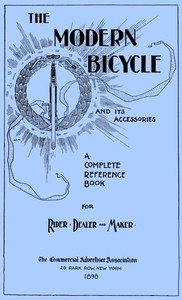
The Modern Bicycle and Its Accessories
Written by Alex Schwalbach,Julius Wilcox
Chaptra reads alongside you — AI insights, chapter breakdowns and reader discussions for every book. Join free
About this book
Reading guide
Themes, characters and key ideas in The Modern Bicycle and Its Accessories, written by Chaptra AI.
- about 8 hours
- advanced
- informative
- historical
- technical
Schwalbach and Wilcox's "The Modern Bicycle and Its Accessories" is a pivotal late 19th-century reference work chronicling the rapid evolution of bicycle technology from 1816 to 1898. Designed for cyclists, dealers, and manufacturers, it serves as a comprehensive guide to construction advancements, mechanical intricacies, and accessory innovations. The book contextualizes the cycling landscape of 1898, noting economic conditions and the re-emergence of chainless models, while emphasizing the crucial need for riders to understand their machines for optimal performance. This volume offers invaluable insight into the mechanical, material, and cultural shifts that defined the bicycle's golden age.
“"The year 1898 marks a noteworthy epoch in the annals of cycling, distinguished by unprecedented advancements in quality and the most economical market conditions yet witnessed."”
Key themes
- Technological Innovation and Progress
- The book meticulously documents the continuous advancements in bicycle design, materials, and mechanics from 1816 to 1898. It highlights the ingenuity of engineers and inventors in addressing challenges like propulsion, stability, and comfort, showcasing a relentless pursuit of efficiency and performance. This theme underscores the human drive to improve and perfect machinery.
- The Importance of Mechanical Understanding
- A central tenet of the book is the belief that cyclists, dealers, and manufacturers should possess a deep understanding of their machines. This isn't merely for practical maintenance but for appreciating the underlying engineering principles and making informed choices. It promotes an active engagement with technology rather than passive consumption.
- The Evolution of Industry and Market
- The book implicitly charts the growth of the bicycle manufacturing industry, reflecting on market conditions, competition, and consumer demand. It touches upon the economic factors influencing design choices and the availability of products, offering a snapshot of a burgeoning industrial sector.
Worth discussing
How does the book's emphasis on mechanical understanding for cyclists resonate with modern consumer culture and technology?
Chapter-by-chapter breakdowns, character arcs and the full thematic analysis come with a free account.
Discussions
No one has started one yet
Questions this book opens up
No discussions yet
Be the first to start a discussion about this book!
Sign up to start the discussionReviews
No reviews yet
Be the first to review this book!