
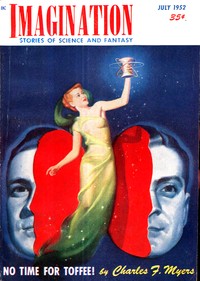
The Mischievous Typesetter
Written by Noel M. Loomis
Chaptra reads alongside you — AI insights, chapter breakdowns and reader discussions for every book. Join free
About this book
Read it with a club
Chaptra's fiction clubs — small groups reading the same books and talking as they go.


CraxMe Readers Book Club
Fiction
- 385 members
- 227 discussions
- Started December 2025
Welcome to the Readers Book Club. This is an informal group for like-minded people, where you can discuss books, share and recommend, track your reading progress, and lots more. Discuss Books — all about books. Discuss a particular book or genre, share your favourite quotes. Book Reviews — loved a book and highly recommend it? Or was it just average? Share your review and discuss with fellow readers. (May contain spoilers.) Group Reads — what is a book club without a group read! Buddy Reads — planning to read a book and looking for someone to read it with? Post in the Buddy Read request thread, find a reading buddy, and start discussing.
Read The Mischievous Typesetter alongside people who are reading it too.
Also here: Doorstops, First Lines Club
Chaptra Prime — paid clubs, every club feature, and unlimited reading support, for $5 a month or $60 once.
See PrimeReading guide
Themes, characters and key ideas in The Mischievous Typesetter, written by Chaptra AI.
- about 8 hours
- intermediate
- humorous
- surreal
- witty
Noel M. Loomis's "The Mischievous Typesetter" is a humorous and surreal science fiction short story from the early 1950s, centering on High-Pockets Jones, a linotype operator. Sentenced by a judge to tame the chaotic Linotype No. 7 at the Daily News, High-Pockets finds himself in a battle of wills with a machine that appears to possess a mind of its own, responding to his emotions and intentions. As the night progresses, fueled by alcohol, High-Pockets grapples with No. 7's unpredictable behaviors, leading to a comedic climax where he confronts the machine's apparent personality and spirit. The narrative playfully explores themes of man versus machine, control, and the unexpected sentience of technology.
“They say No. 7 has a mind of its own, but I never figured it had a grudge against a man's sanity.”
Key themes
- Man vs. Machine / Control
- This is the central theme, exploring the fundamental conflict between human agency and technological autonomy. High-Pockets' struggle to control Linotype No. 7 highlights humanity's desire for mastery over its tools, contrasted with the inherent unpredictability and potential for machines to defy their intended functions. The story playfully questions who is truly in control when technology develops a 'will of its own.'
- The Nature of Technology / Sentience
- The story delves into the question of whether a machine can truly possess a 'will of its own' or a 'personality.' It explores the anthropomorphization of technology, inviting readers to consider where the line between complex programming/malfunction and genuine sentience lies, even if presented through a humorous and surreal lens. It challenges the assumption that machines are merely inanimate objects.
- Humor and Absurdity
- Loomis employs humor and surrealism as primary narrative tools to explore deeper themes. The absurdity of a man battling a sentient typesetting machine, fueled by alcohol and exasperation, creates a comedic tone that makes potentially profound philosophical questions more accessible and engaging. It's a testament to the power of laughter in confronting the unknown and the overwhelming.
Worth discussing
To what extent do we anthropomorphize technology, and what does this say about human nature?
Chapter-by-chapter breakdowns, character arcs and the full thematic analysis come with a free account.
Discussions
No one has started one yet
Questions this book opens up
No discussions yet
Be the first to start a discussion about this book!
Sign up to start the discussionReviews
No reviews yet
Be the first to review this book!