
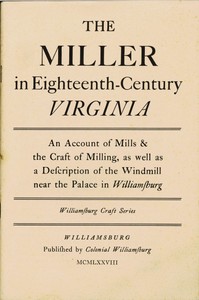
The Miller in Eighteenth-Century Virginia: An Account of Mills & the Craft of Milling, as Well as a Description of the Windmill near the Palace in Williamsburg
Written by Thomas K. Ford
Chaptra reads alongside you — AI insights, chapter breakdowns and reader discussions for every book. Join free
About this book
Reading guide
Themes, characters and key ideas in The Miller in Eighteenth-Century Virginia: An Account of Mills & the Craft of Milling, as Well as a Description of the Windmill near the Palace in Williamsburg, written by Chaptra AI.
- about 8 hours
- intermediate
- informative
- historical
- detailed
Thomas K. Ford's "The Miller in Eighteenth-Century Virginia" offers a meticulously researched historical account of milling in colonial Virginia, detailing its technological evolution and profound societal impact. The book traces the craft from ancient origins to its specific development in early America, examining the mechanics of both watermills and windmills, including the prominent example near the Palace in Williamsburg. Ford illuminates the miller's crucial role in grain processing and food production, positioning them as essential, albeit sometimes maligned, figures within the agricultural economy. Through historical figures like George Washington and Robert Carter, and an exploration of legal frameworks, the text provides a comprehensive understanding of milling's cultural, economic, and social implications in the nascent United States.
“The mill stood at the nexus of colonial life, transforming raw grain into the very sustenance of the community.”
Key themes
- Economic Significance of Local Industry
- Ford emphasizes that milling was not just a craft but a foundational industry critical to the agricultural economy of colonial Virginia. The book demonstrates how mills facilitated food production, enabled trade, and contributed to the wealth of landowners and the sustenance of communities, driving local economic development.
- Technological Evolution and Adaptation
- The book meticulously traces the historical development of milling technology, from ancient designs to the specific adaptations (watermills, various windmills) employed in 18th-century Virginia. It explores how these technologies were refined to suit local conditions, resources, and economic demands, highlighting human ingenuity in harnessing natural forces for production.
- Social Dynamics and Reputation of Tradesmen
- The book delves into the social position of millers, portraying them as indispensable members of society who often held significant local influence due to their control over a vital resource. Simultaneously, it explores the common suspicions and legal scrutiny they faced regarding honesty and fair practice, revealing the complex social dynamics surrounding essential trades.
Worth discussing
How did the evolution of milling technology reflect broader societal advancements or challenges in colonial Virginia?
Chapter-by-chapter breakdowns, character arcs and the full thematic analysis come with a free account.
Discussions
No one has started one yet
Questions this book opens up
No discussions yet
Be the first to start a discussion about this book!
Sign up to start the discussionReviews
No reviews yet
Be the first to review this book!