
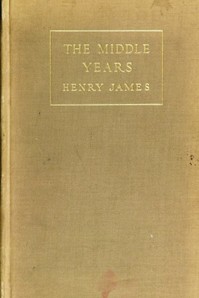
The Middle Years
Written by Henry James
Chaptra reads alongside you — AI insights, chapter breakdowns and reader discussions for every book. Join free
About this book
Reading guide
Themes, characters and key ideas in The Middle Years, written by Chaptra AI.
- about 8 hours
- advanced
- reflective
- introspective
- contemplative
Henry James's "The Middle Years" is a profound partially autobiographical reflection that chronicles the author's formative experiences during his transition from youth to adulthood, particularly focusing on his arrival and initial encounters in London in March 1869. Through introspective observations and vivid imagery, James delves into the complexities of personal growth, the shaping of identity, and the intricate interplay between individual perception and the surrounding cultural landscape. The narrative captures a period of intense intellectual and emotional discovery, revealing how pivotal interactions and impressions laid the groundwork for his future artistic and personal journey. It serves as an examination of memory, artistic sensibility, and the profound impact of place on the evolving self.
“It was in London, in that very March of '69, that the great sense of things began to dawn upon me, a perception of life's intricate web.”
Key themes
- Memory and Perception
- The book deeply explores how memory functions not as a passive recall but as an active, reconstructive process, shaped by present understanding and emotional resonance. James examines how past events are perceived and re-perceived over time, highlighting the subjective nature of experience and the elusive quality of 'truth.' The narrative itself is an exercise in this, with the older James reflecting on his younger self, offering insights that only time can provide.
- The Artist's Development and Sensibility
- This theme focuses on the genesis and maturation of James's artistic mind. It details how his early experiences, observations, and intellectual encounters in London contributed to the formation of his unique literary sensibility. The book is an inquiry into what makes a writer, how their particular lens on the world is forged, and the crucial role of environment and interaction in shaping a creative spirit.
- Identity and Self-Discovery
- The narrative charts the profound journey of self-discovery as James transitions from the relative innocence of youth to the complexities of adulthood. It explores how identity is not static but fluid, constantly shaped by new experiences, challenges, and the internal processing of one's place in the world. The shift from America to England is a catalyst for this profound re-evaluation of self.
Worth discussing
How does James's portrayal of London shape his personal and artistic development?
Chapter-by-chapter breakdowns, character arcs and the full thematic analysis come with a free account.
Discussions
No one has started one yet
Questions this book opens up
No discussions yet
Be the first to start a discussion about this book!
Sign up to start the discussionReviews
No reviews yet
Be the first to review this book!