
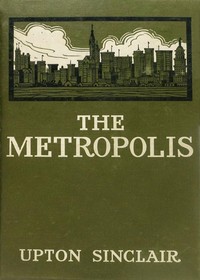
The Metropolis
Written by Upton Sinclair
Chaptra reads alongside you — AI insights, chapter breakdowns and reader discussions for every book. Join free
About this book
Reading guide
Themes, characters and key ideas in The Metropolis, written by Chaptra AI.
- about 8 hours
- intermediate
- critical
- stark
- observational
Upton Sinclair's "The Metropolis" plunges readers into the heart of early 20th-century New York City through the eyes of Allan Montague, a young man navigating the stark realities of urban life. Arriving from the countryside, Allan is initially captivated by the city's grandeur and its elite society, facilitated by connections to his father's past. However, his experiences quickly expose him to the profound chasm between the opulent lives of the wealthy and the desperate struggles of the working class. The novel meticulously details Allan's journey from naive observer to a witness of social injustice, culminating in an encounter with a fervent socialist speaker that challenges his perceptions. Sinclair uses Allan's awakening to launch a scathing critique of unchecked capitalism, social stratification, and the moral compromises inherent in the pursuit of wealth, making it a pivotal work in American social realism.
“The city was a monster of stone and steel, beautiful and terrible, devouring the souls of men in its relentless maw.”
Key themes
- Social Inequality and Class Struggle
- This is the central theme of the novel, exploring the vast and often brutal divide between the opulent lives of New York's elite and the desperate struggles of its working class. Sinclair vividly portrays how wealth concentrates power and privilege, while poverty leads to exploitation and suffering, highlighting the systemic nature of class conflict.
- The Illusion of the American Dream
- The novel critiques the myth of the American Dream, particularly for those at the bottom of the social hierarchy. Allan arrives believing in upward mobility and opportunity, but he quickly learns that true success and influence are often inherited or achieved through morally dubious means, rather than sheer hard work or merit alone.
- Urbanization and Modernity's Discontents
- Sinclair explores the double-edged sword of rapid urbanization and industrial progress. While New York City represents innovation and opportunity, it also fosters anonymity, moral decay, and a dehumanizing environment for many of its inhabitants. The novel critiques the social cost of unchecked urban growth and industrialization.
Worth discussing
How does Allan Montague's perspective shift throughout the novel, and what specific events or encounters contribute to this change?
Chapter-by-chapter breakdowns, character arcs and the full thematic analysis come with a free account.
Discussions
No one has started one yet
Questions this book opens up
No discussions yet
Be the first to start a discussion about this book!
Sign up to start the discussionReviews
No reviews yet
Be the first to review this book!