
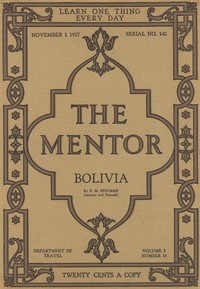
The Mentor: Bolivia, vol. 5, Num. 18, Serial 142, November 1, 1917
Written by E. M. (Edward Manuel) Newman
Chaptra reads alongside you — AI insights, chapter breakdowns and reader discussions for every book. Join free
About this book
Reading guide
Themes, characters and key ideas in The Mentor: Bolivia, vol. 5, Num. 18, Serial 142, November 1, 1917, written by Chaptra AI.
- about 4 hours
- intermediate
- Informative
- Historical
- Exploratory
E. M. Newman's 'The Mentor: Bolivia, vol. 5, Num. 18, Serial 142, November 1, 1917' is an early 20th-century travel publication offering a comprehensive look into Bolivia. It explores the nation's diverse society, rich culture, complex history, and varied geography, reflecting the realities of a landlocked country with a significant indigenous population. The work delves into themes of colonial history, the lives of indigenous peoples like the Aymaras and Quichuas, and the interplay between culture and natural landscapes. Newman provides detailed descriptions of cities such as La Paz, alongside an examination of Bolivia's economic drivers like mining and agriculture. Richly illustrated, the publication serves as a historical snapshot of Bolivia's unique customs, diverse geography, and the dynamic social interactions among its various racial and cultural groups during that era.
“"Bolivia, a landlocked jewel of the Andes, presents a tapestry woven with ancient traditions and the enduring spirit of its indigenous peoples."”
Key themes
- Indigenous Culture and Resilience
- Newman extensively documents the customs, traditions, languages, and societal structures of Bolivia's indigenous peoples, particularly the Aymara and Quichua. This theme highlights their enduring cultural identity despite centuries of colonial influence and attempts at assimilation. The publication showcases their resilience, their deep connection to the land, their traditional practices in agriculture and crafts, and their vibrant presence in Bolivian society, even as they navigate a changing world.
- Colonialism and its Legacy
- This theme explores the profound and lasting impact of Spanish colonization on Bolivia. Newman details the historical struggles for independence, the imposition of new political and economic systems, and the subsequent marginalization and exploitation of indigenous populations. The narrative likely examines how colonial structures continued to influence socio-political dynamics, land ownership, and racial hierarchies in early 20th-century Bolivia, shaping its identity and challenges.
- Geography and Human Adaptation
- Bolivia's diverse and extreme geography – from the high-altitude Andes to the Amazon basin – plays a central role in shaping its human societies and cultures. Newman explores how people have adapted to these varied environments, influencing settlement patterns, economic activities, and cultural practices. This theme emphasizes the intimate relationship between the land and its inhabitants, highlighting the challenges and opportunities presented by Bolivia's unique natural landscapes.
Worth discussing
How does Newman's perspective as an early 20th-century Western observer shape his portrayal of Bolivia and its indigenous populations?
Chapter-by-chapter breakdowns, character arcs and the full thematic analysis come with a free account.
Discussions
No one has started one yet
Questions this book opens up
No discussions yet
Be the first to start a discussion about this book!
Sign up to start the discussionReviews
No reviews yet
Be the first to review this book!