
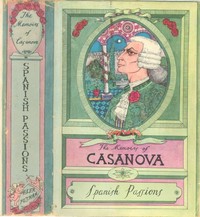
The Memoirs of Jacques Casanova de Seingalt, Vol. VI (of VI), "Spanish Passions": The First Complete and Unabridged English Translation, Illustrated with Old Engravings
Written by Giacomo Casanova
Chaptra reads alongside you — AI insights, chapter breakdowns and reader discussions for every book. Join free
About this book
Reading guide
Themes, characters and key ideas in The Memoirs of Jacques Casanova de Seingalt, Vol. VI (of VI), "Spanish Passions": The First Complete and Unabridged English Translation, Illustrated with Old Engravings, written by Chaptra AI.
- about 10 hours
- advanced
- Adventurous
- Historical
- Romantic
Volume VI of Casanova's unabridged memoirs, titled 'Spanish Passions,' continues the intricate life of the infamous libertine, adventurer, and diplomat, Jacques Casanova. Beginning with his expulsion from Vienna due to gambling accusations and personal loss, Casanova immediately demonstrates his characteristic wit and manipulative charm, seeking reprieve from the empress and navigating political landscapes to restore his standing and finances. This volume further chronicles his relentless pursuit of freedom, connection, and pleasure across Europe, ultimately leading him through the social complexities and romantic entanglements of Spain. The narrative offers a vivid, first-person account of 18th-century European society, reflecting deeply on themes of love, honor, identity, and the human condition against a backdrop of political intrigue and personal adventure.
“One must live, even if it means to live by one's wits alone.”
Key themes
- Love, Desire, and Romantic Entanglements
- Casanova's memoirs are inextricably linked with his numerous romantic liaisons. This volume, with its title 'Spanish Passions,' promises a continuation of his exploration of love, lust, and the complexities of human desire. He approaches these relationships with a blend of genuine affection, strategic manipulation, and an almost scientific curiosity, offering a candid and often amoral perspective on courtship, seduction, and the emotional landscape of the 18th century.
- Freedom vs. Confinement
- This theme is central to Casanova's entire life and is vividly highlighted by his initial predicament of facing expulsion from Vienna. His constant travels, his evasion of authorities, and his relentless pursuit of personal autonomy underscore his deep-seated desire for freedom, both physical and social. He often finds himself confined by laws, social conventions, or financial woes, only to use his wit and charm to escape or circumvent these limitations.
- Identity and Self-Presentation
- Casanova is a master of self-reinvention and carefully curated identity. His ability to charm, manipulate, and 'regain his standing' through 'manipulative storytelling' highlights how he constructs and performs his identity to navigate different social environments. He is often a trickster figure, adapting his persona to suit his immediate needs, whether it's to impress an empress or seduce a lover. The memoirs themselves are an act of self-creation, an attempt to define his legacy.
Worth discussing
How does Casanova's portrayal of himself challenge or reinforce traditional notions of heroism and morality?
Chapter-by-chapter breakdowns, character arcs and the full thematic analysis come with a free account.
Discussions
No one has started one yet
Questions this book opens up
No discussions yet
Be the first to start a discussion about this book!
Sign up to start the discussionReviews
No reviews yet
Be the first to review this book!