
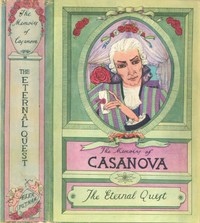
The Memoirs of Jacques Casanova de Seingalt, Vol. III (of VI), "The Eternal Quest": The First Complete and Unabridged English Translation, Illustrated with Old Engravings
Written by Giacomo Casanova
Chaptra reads alongside you — AI insights, chapter breakdowns and reader discussions for every book. Join free
About this book
Reading guide
Themes, characters and key ideas in The Memoirs of Jacques Casanova de Seingalt, Vol. III (of VI), "The Eternal Quest": The First Complete and Unabridged English Translation, Illustrated with Old Engravings, written by Chaptra AI.
- about 10 hours
- advanced
- adventurous
- erotic
- witty
Volume III of "The Memoirs of Jacques Casanova de Seingalt" continues the enthralling autobiography of the notorious 18th-century Venetian adventurer, delving deeper into his life of ceaseless travel, romantic pursuits, and social maneuvering. This installment chronicles Casanova's escapades primarily in Paris and Holland, offering a vivid tableau of European high society, gambling dens, and intimate encounters. The narrative begins with Casanova extending aid to Count Tiretta, a man embroiled in financial scandal, which immediately plunges the reader into a world of complex social dynamics and moral ambiguities. Through witty dialogue and introspective commentary, the volume explores the multifaceted nature of love, desire, and the often-tumultuous relationships that defined Casanova's extraordinary existence, solidifying his reputation as a master of both seduction and survival.
“"Life is a labyrinth, and only those who dare to lose themselves within it truly find their way."”
Key themes
- Love and Seduction
- This is a central and defining theme of Casanova's memoirs. He explores love not just as a romantic ideal but as a complex interplay of desire, strategy, emotional attachment, and social performance. Seduction is depicted as an art form requiring wit, charm, and a deep understanding of human psychology, often blurring the lines between genuine affection and calculated manipulation.
- Adventure and Freedom
- Casanova's life is a testament to a relentless pursuit of personal freedom and adventure. This theme explores his constant movement, his defiance of societal constraints, and his embrace of an unpredictable, self-directed existence. It highlights his desire to live life on his own terms, unbound by conventional responsibilities or geographical limitations.
- Social Class and Mobility
- Casanova, born without noble title, masterfully navigates and often thrives within the aristocratic circles of 18th-century Europe. This theme examines the fluid nature of social status, the importance of charm, wit, and connections, and the ways in which individuals could ascend or fall within a seemingly rigid social hierarchy. It highlights the power of self-invention in a class-conscious society.
Worth discussing
How does Casanova's portrayal of love and seduction reflect or challenge 18th-century societal norms?
Chapter-by-chapter breakdowns, character arcs and the full thematic analysis come with a free account.
Discussions
No one has started one yet
Questions this book opens up
No discussions yet
Be the first to start a discussion about this book!
Sign up to start the discussionReviews
No reviews yet
Be the first to review this book!