
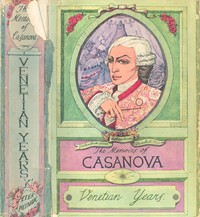
The Memoirs of Jacques Casanova de Seingalt, 1725-1798. Complete
Written by Giacomo Casanova
Chaptra reads alongside you — AI insights, chapter breakdowns and reader discussions for every book. Join free
About this book
This work by Casanova, Giacomo offers readers a unique literary experience. The narrative explores themes of europe and casanova, giacomo, 1725-1798.
Reading guide
Themes, characters and key ideas in The Memoirs of Jacques Casanova de Seingalt, 1725-1798. Complete, written by Chaptra AI.
- about 100 hours
- advanced
- adventurous
- philosophical
- romantic
Giacomo Casanova's complete memoirs offer an unparalleled, panoramic view of 18th-century Europe through the eyes of one of its most infamous figures. Chronicling his adventures from Venice to Paris, London, and beyond, Casanova recounts a life rich in love affairs, intellectual pursuits, gambling, espionage, and encounters with royalty and commoners alike. More than a mere chronicle of seductions, the work is a profound exploration of freedom, identity, fortune, and the pursuit of pleasure, all set against the backdrop of a rapidly changing continent. It serves as both a historical document and a deeply personal, often philosophical, autobiography that captures the spirit of the Enlightenment era.
“To live is to suffer, to survive is to find some meaning in the suffering.”
Key themes
- Freedom and Autonomy
- Casanova's life is a relentless pursuit of personal freedom, both physical and intellectual. He chafes against all forms of constraint – religious dogma, political authority, social conventions, and even emotional ties that threaten his independence. His travels, his numerous professions, and his daring escape from prison all exemplify his commitment to living life on his own terms, making his own choices, and defying any power that seeks to limit his will.
- Pleasure and Sensuality
- Central to Casanova's philosophy is the belief in the value of pleasure, not merely as fleeting gratification, but as a driving force for a rich and meaningful life. This encompasses not only his celebrated sexual conquests but also the pleasures of fine dining, intellectual conversation, music, art, gambling, and travel. For Casanova, pleasure is an affirmation of life, a form of knowledge, and a means to experience the world in its fullest dimension, often intertwined with aesthetic appreciation and intellectual curiosity.
- 18th-Century European Society and Enlightenment Values
- The memoirs provide an invaluable, albeit subjective, social history of Enlightenment Europe. Casanova interacts with all strata of society, from kings and popes to prostitutes and peasants, offering detailed observations on customs, fashion, politics, intellectual currents, and daily life in various cities. He embodies many of the contradictions of the Enlightenment: a rationalist who dabbles in magic, a proponent of freedom who benefits from aristocratic patronage, and a man of science who embraces sensual pleasure. The work reflects the era's intellectual ferment, its social hierarchies, and the growing tension between tradition and modernity.
Worth discussing
To what extent are Casanova's memoirs a reliable historical document versus a work of self-mythologizing fiction?
Chapter-by-chapter breakdowns, character arcs and the full thematic analysis come with a free account.
Discussions
No one has started one yet
Questions this book opens up
No discussions yet
Be the first to start a discussion about this book!
Sign up to start the discussionReviews
No reviews yet
Be the first to review this book!