
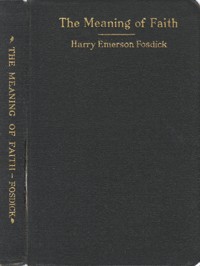
The Meaning of Faith
Written by Harry Emerson Fosdick
Chaptra reads alongside you — AI insights, chapter breakdowns and reader discussions for every book. Join free
About this book
Reading guide
Themes, characters and key ideas in The Meaning of Faith, written by Chaptra AI.
- about 8 hours
- intermediate
- uplifting
- philosophical
- reflective
Harry Emerson Fosdick's "The Meaning of Faith" is a seminal early 20th-century theological work that redefines faith beyond rigid doctrinal adherence, positioning it as an indispensable, lived human experience. Written amidst the turmoil of war, the book explores faith's critical role in navigating life's complexities, shaping personal character, and providing solace during adversity. Fosdick emphasizes that true faith is a dynamic force informing actions and responses to challenges, fostering profound relationships with the divine and humanity. He guides readers toward a practical, existential understanding of faith, highlighting its necessity for building courage and living a meaningful life in an uncertain world.
“True faith is not a creed to be recited, but a life to be lived.”
Key themes
- The Nature of Faith Beyond Dogma
- Fosdick fundamentally challenges the notion of faith as mere intellectual assent to rigid doctrines. Instead, he posits faith as a dynamic, experiential force — a deep-seated trust, an orientation of the soul, and a lived commitment that transcends specific creeds. This theme is central to the book's purpose, aiming to make faith accessible and relevant to individuals grappling with modern thought and scientific inquiry, freeing it from the constraints of fundamentalist interpretations.
- Faith in Crisis and Uncertainty
- Written during a period of war, this theme explores faith's crucial role in providing comfort, courage, and stability amidst profound personal and societal turmoil. Fosdick argues that in times of uncertainty, faith becomes an indispensable resource for navigating fear, despair, and the unknown, offering a framework for meaning when external circumstances offer none. It's about finding an inner resilience and hope when the outer world is chaotic.
- Practical and Lived Faith
- This theme emphasizes that faith is not merely an abstract belief system but a vital, active force that informs one's daily actions, responses, and choices. Fosdick champions a faith that translates into practical living, shaping ethical conduct, fostering empathy, and inspiring engagement with the world. It is about the tangible impact of one's spiritual convictions on their everyday existence and interactions.
Worth discussing
How does Fosdick redefine faith beyond traditional doctrinal beliefs, and what are the implications of this broader definition?
Chapter-by-chapter breakdowns, character arcs and the full thematic analysis come with a free account.
Discussions
No one has started one yet
Questions this book opens up
No discussions yet
Be the first to start a discussion about this book!
Sign up to start the discussionReviews
No reviews yet
Be the first to review this book!