
About this book
Reading guide
Themes, characters and key ideas in The Mayflower and Her Log; July 15, 1620-May 6, 1621 — Complete, written by Chaptra AI.
- about 12 hours
- advanced
- informative
- historical
- meticulous
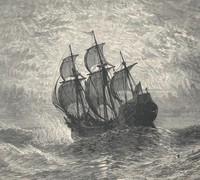
Azel Ames's "The Mayflower and Her Log" is a meticulous historical account, published in the early 20th century, detailing the pivotal voyage of the Mayflower and the establishment of the Plymouth Colony between July 15, 1620, and May 6, 1621. The book serves as a comprehensive compilation of original sources, aiming to provide an accurate and exhaustive record of the Pilgrims' preparations, their arduous transatlantic journey, and the initial challenges of settlement in America. Ames emphasizes the profound historical significance of this narrative, not only for the descendants of the Pilgrims but for the broader trajectory of civilization. Through diligent research, he explores the motivations for their exodus, the logistical complexities, and the unwavering determination that underpinned their quest for freedom in a new land, asserting the enduring value of documenting every aspect of their experience.
“The unique importance of this narrative not just for descendants of the Pilgrims but for civilization at large.”
Key themes
- Historical Accuracy and Documentation
- Ames's primary objective is to compile original sources and provide a meticulously accurate historical account. This theme explores the challenges and importance of historical research, the reliance on primary documents, and the endeavor to reconstruct past events faithfully. It highlights the historian's responsibility to present facts without undue embellishment.
- Religious Freedom and Self-Determination
- Central to the Pilgrims' exodus was their pursuit of religious freedom, a core motivation that Ames highlights. This theme examines the courage required to leave one's homeland for the sake of conscience and the foundational role this ideal played in the formation of the nascent American identity. It underscores the Pilgrims' determination to govern themselves and worship according to their beliefs.
- The Foundations of American Identity
- Ames posits the Mayflower narrative as uniquely important 'for civilization at large,' underscoring its role in shaping American identity. This theme examines how the Pilgrims' journey, their ideals, and their collective action contributed to the foundational myths and values of the United States, including self-governance, community, and the pursuit of a better life.
Worth discussing
How does Ames's approach to compiling original sources impact our understanding of the Mayflower voyage compared to more narrative histories?
Chapter-by-chapter breakdowns, character arcs and the full thematic analysis come with a free account.
Discussions
No one has started one yet
Questions this book opens up
No discussions yet
Be the first to start a discussion about this book!
Sign up to start the discussionReviews
No reviews yet
Be the first to review this book!